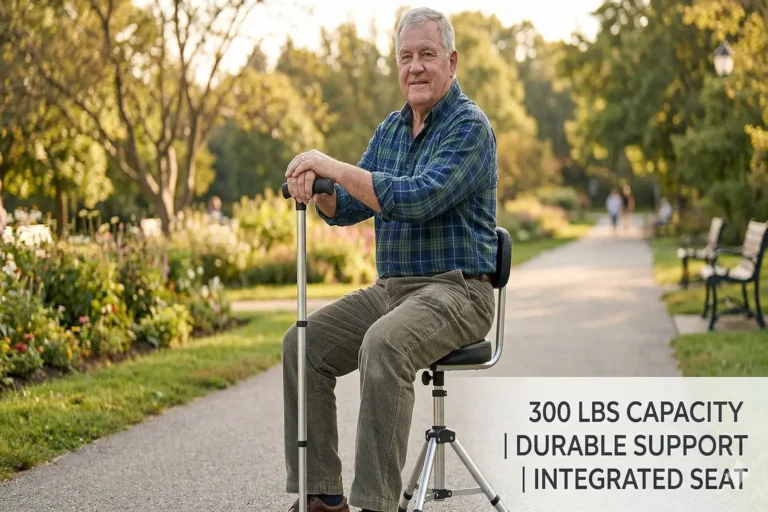
Short answer: A seat cane combines a walking aid with a small fold-out seat, so you can rest during walks, queues or events. For heavier users, check that both the cane and the seat are rated for your weight. Below are our picks. For many, finding the right support can make a huge difference. A heavy-duty walking cane with a…

Quick answer: after a stroke, a quad cane is often recommended because its four-point base gives more stability for one-sided weakness. It's held in the stronger hand. Your stroke rehab team should choose and set up the cane, as the right aid depends on your strength and balance. Recovering from a stroke is often filled with frustrating moments. Simple tasks…

Quick answer: a carbon fiber walking cane is noticeably lighter than most aluminium canes, so it's less tiring to lift with every step. Look for a secure height adjustment, a comfortable handle, a weight rating that suits you, and a good tip. Many carbon fiber canes also fold for travel. What to look for FeatureWhy it matters WeightThe main reason…

Quick answer: the best walking canes for elderly women are lightweight, height-adjustable canes with a comfortable, ergonomic grip that suits smaller hands, and a non-slip tip. Choose a quad or self-standing cane for extra stability, and a folding cane for travel. What to look for FeatureWhy it matters Light weightEasier to lift with every step, especially with arthritis in the…

Short answer: The most comfortable cane handles for older adults are usually ergonomic palm grips, fritz handles and soft offset grips, because they spread pressure across the hand and keep the wrist straight. Below are our picks, plus what to look for. For many older adults, finding the right walking cane isn’t just about support—it’s about comfort and confidence every…

Quick answer: for arthritis, choose a lightweight cane with an ergonomic or soft, wide grip that doesn't force a tight squeeze, and an offset shaft that keeps your wrist straight. Set the height to your wrist crease, and hold the cane in the hand opposite your most painful hip or knee. Choosing the wrong walking cane can turn simple steps…

Quick answer: common eyesight problems in older age include presbyopia (trouble focusing up close), cataracts, glaucoma, age-related macular degeneration and diabetic eye disease. Regular eye exams catch many of these early, and good lighting and up-to-date glasses also help prevent falls. As people get older, many changes happen in the body. One of the most common and often overlooked is…

Short answer: A good hiking watch should have GPS for tracking and navigation, a battery that lasts your longest hike, an altimeter, barometer and compass, and a tough, water-resistant case. Below are our picks and how to choose. It’s frustrating and can even be dangerous. That’s why having the right hiking watch matters so much. A good watch does more…

Short answer: The best hiking footwear fits well, grips on wet and loose ground, and suits the trail. Lightweight trail shoes work for easy, dry paths. Boots with ankle support and a deep tread are better for rough or wet terrain. Below are our picks and what to look for. It’s frustrating when your footwear holds you back instead of…

Quick answer: a shower chair lets you wash sitting down, which reduces the risk of slipping in the shower. Check the weight rating, adjustable legs, non-slip rubber feet and drainage holes, and make sure it fits your shower or tub before buying. HOMLAND Shower Chair for Inside Shower with Removable Back, 400 lbs Heavy Duty Bath Seat for Bathtub, Safety…
