The Shock: You heard the doctor say “spinal fracture.” You instantly imagined a wheelchair.
The Reality: Most spinal fractures (especially compression fractures) do not cause paralysis. In fact, doctors often want you moving sooner rather than later.
The Big Question: “Can you walk around with a broken back?”
The Answer: Yes. For stable fractures, walking is not just allowed; it is medicine. It improves blood flow. It prevents blood clots. It speeds up bone healing. But you must do it correctly, or you risk making it worse.
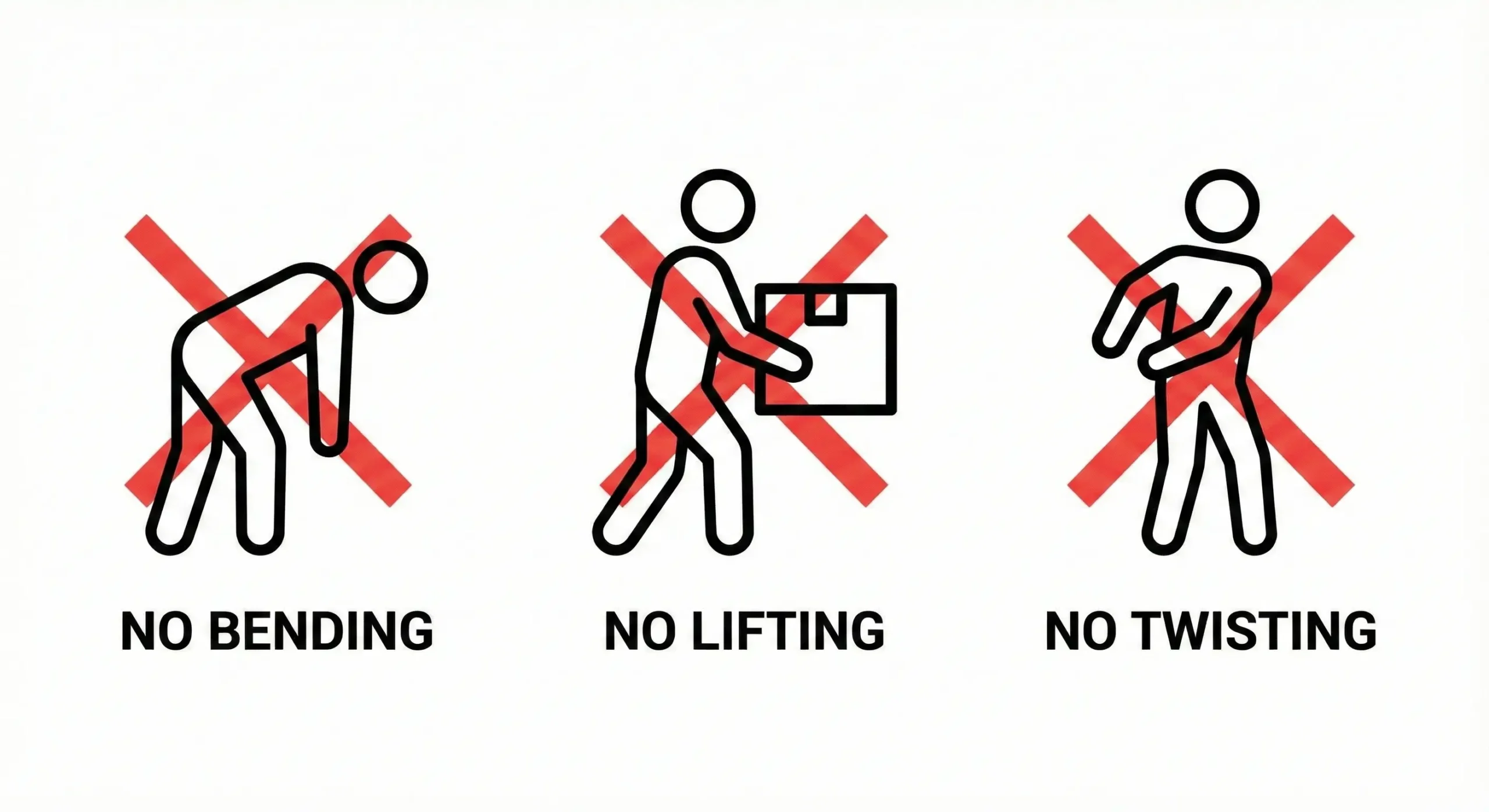
The Golden Rule of Recovery: No “B.L.T.”
Before you take a single step, memorize the B.L.T. rule. Breaking this rule causes the bone to collapse further.
- No Bending: Do not bend at the waist to pick up socks or tie shoes. Keep your spine straight like a rod.
- No Lifting: Do not lift anything heavier than a gallon of milk (approx. 8 lbs).
- No Twisting: Do not twist your torso to reach for the remote or look behind you. Turn your whole body with your feet.
How to Walk Safely (Step-by-Step)
Walking promotes healing, but “power walking” does not. Follow this routine to stay safe:
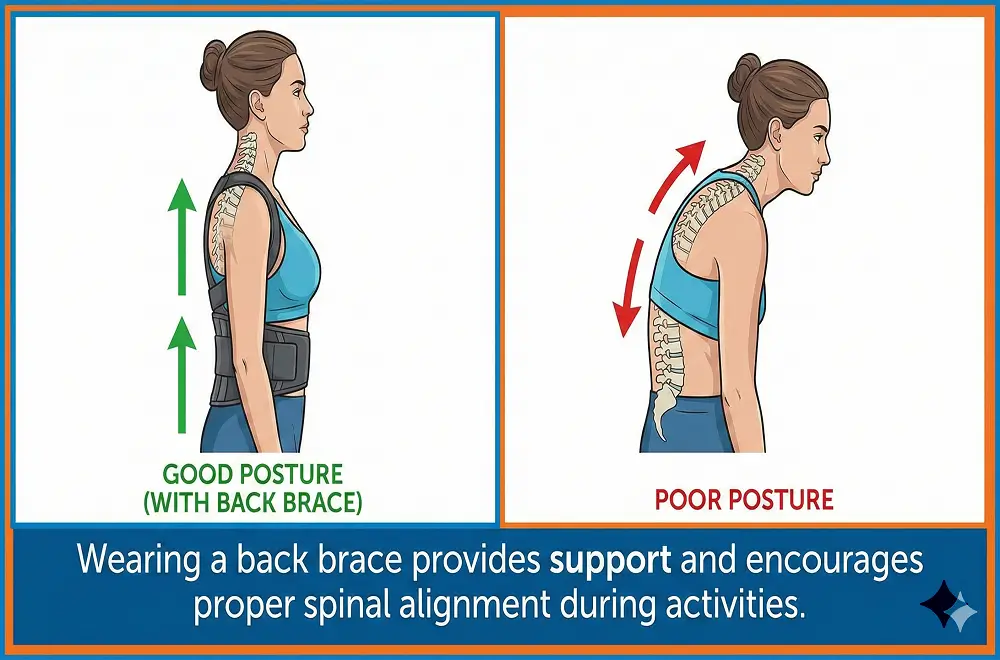
1. Gear Up: Wear your back brace if prescribed. It acts like a cast for your spine. It reminds you not to bend.
2. The Stance: Imagine a string pulling the top of your head to the ceiling. Pull your shoulders back. Tuck your stomach in slightly.
3. The Surface: Stick to flat ground. Walk inside your home or on a paved track. Avoid uneven sidewalks. A fall right now could be catastrophic.
4. The Duration: Start with 5-10 minutes. Stop before the pain starts.

Support Your Spine
Use a pulley-system brace to stabilize your lower back and prevent dangerous bending.
FREETOO Back Brace with Lumbar Pad
Check Price on AmazonThe Hardest Part: How to Sit & Sleep
Walking is often less painful than sitting or sleeping. Gravity compresses the spine when you sit.
How to Sit
- Choose Firm Chairs: Use a firm chair with armrests. Push off the armrests to stand up.
- Avoid Soft Sofas: You will sink in. This rounds your back and breaks the “No Bending” rule.
- The Limit: Do not sit for more than 20-30 minutes. Stand up and walk to reset your spine.
How to Sleep (The “Log Roll” Technique)
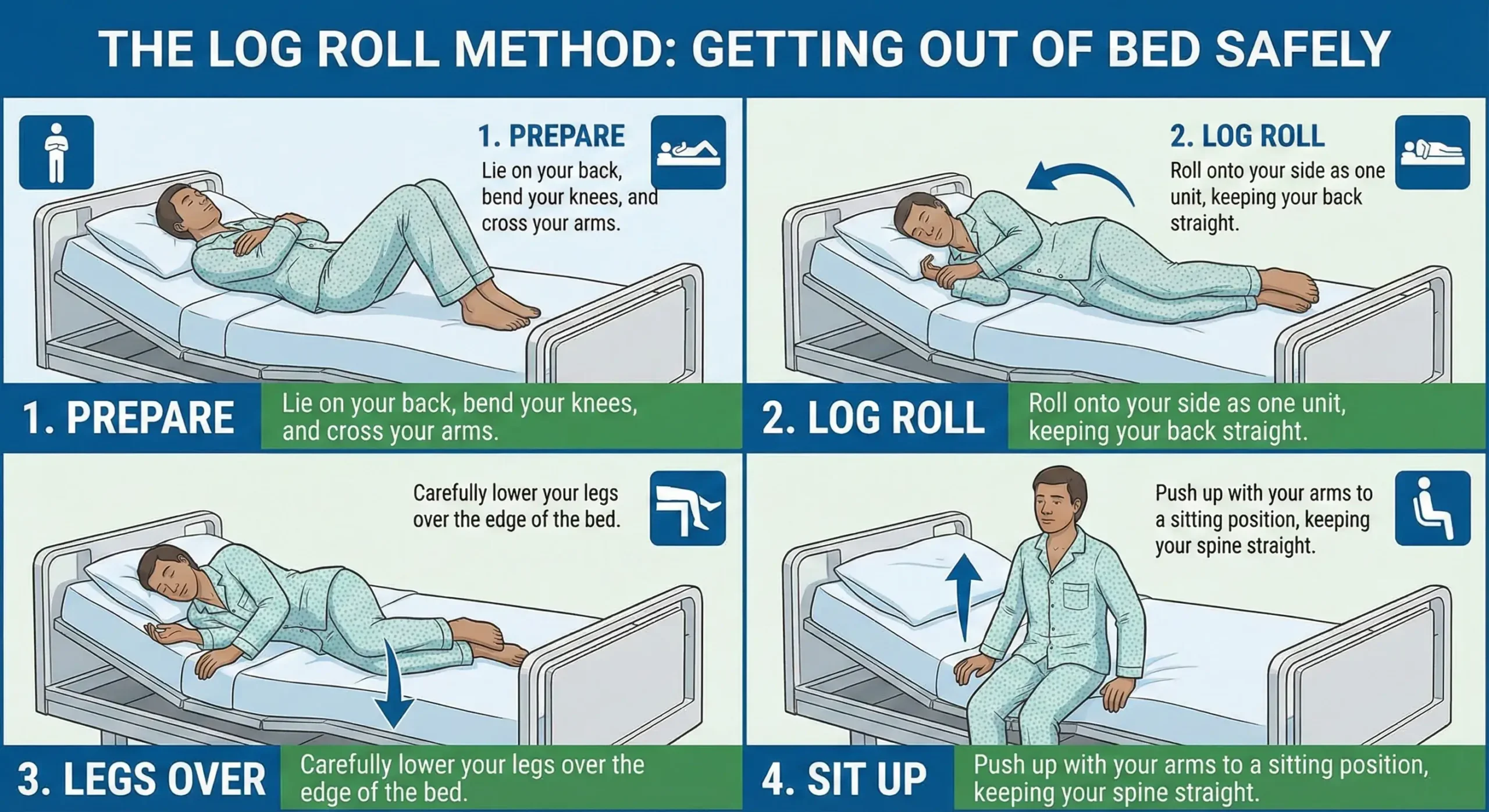
Getting in and out of bed is the most dangerous moment. Use the “Log Roll”:
- Lie on your side near the edge of the bed.
- Move as a unit. Keep your shoulders and hips locked together. Do not twist.
- Push up. Use your arms to push your body up while swinging your legs off the bed simultaneously.
Essential Tools to Avoid Bending
Since you cannot bend over, you need tools to help you live independently.
- Reacher/Grabber: Use this to pick up items from the floor. Do not risk your back for a dropped pen.
- Slip-on Shoes: Avoid laces. You cannot bend to tie them.
- Walker or Cane: Even if your legs are strong, a walker prevents falls. Stability is key right now.

Never Bend Over Again
Lightweight extension arm to pick up trash, phones, or keys without hurting your spine.
Grabber Reacher Tool (32 Inch)
See Details on AmazonPain Relief & Recovery for the Elderly
Elderly patients, especially those with osteoporosis, face a longer road.
Ice vs. Heat: Use ice for the first 48 hours to stop swelling. Use moist heat (like a warm towel) afterwards. It relaxes tight back muscles.
Protein & Calcium: Bones need building blocks. Increase your intake of yogurt, cheese, and lean meats.

Build Stronger Bones
Maximum strength Calcium Citrate + D3 to support bone repair in elderly patients.
21st Century Calcium Citrate + D3
Shop SupplementsReal Talk: Community Insights (Reddit & Quora)
The “Sneezing” Fear: Users on Reddit warn that sneezing hurts bad. Pro Tip: If you feel a sneeze coming, hug a pillow tight against your chest. It stabilizes the ribs and spine.
The “Mental Battle”: Quora users emphasize that fear is the enemy. “Motion is Lotion.” If you stay in bed, you get stiff. You get depressed. Get up and walk.
Frequently Asked Questions (FAQ)
Can you die from a broken back?
Rarely from the break itself (unless it severs the spinal cord). The real danger comes from staying in bed too long. This causes pneumonia or blood clots.
How long does a broken vertebrae take to heal?
Most compression fractures heal in 8 to 10 weeks with rest and bracing.
What precautions should be taken for a fractured spine?
Remove tripping hazards. Roll up area rugs. Install nightlights. Preventing a second fall is your number one priority.
Final Verdict: Keep Moving, Keep Straight
A broken back is scary. But it is manageable.
Your Recovery Checklist
1. Respect the B.L.T. Rule.
2. Use a Grabber Tool.
3. Walk daily to speed up healing.

Tariqul
Tariqul is a dedicated health and wellness blogger with a background in health sciences. With years of experience in patient education and health communication, he focuses on providing accurate, easy-to-understand information to help readers make informed decisions about their well-being. Passionate about bridging the gap between clinical knowledge and everyday life, Tariqu ensures his content is both practical and medically sound.