A broken back sounds terrifying. The medical term is a vertebral compression fracture, and it changes your daily life instantly. You might feel scared to move. You might worry that one wrong step will make it worse.
But staying completely still is rarely the answer. In fact, most doctors want you moving as soon as possible.
This guide explains how to walk safely, what to avoid, and how to speed up your recovery without causing more pain.
Can You Walk Around With a Broken Back?
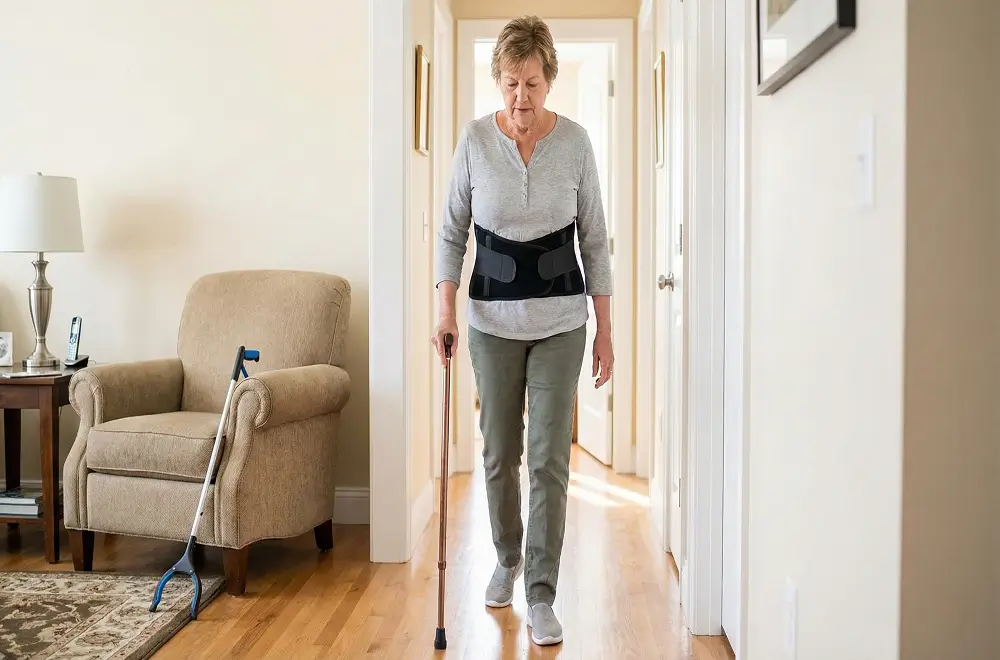
Yes, you can usually walk with a broken back. In fact, you should.
Unless your doctor specifically orders strict bed rest, walking is one of the best things you can do. It keeps your blood flowing and stops your muscles from getting weak.
However, “walking” doesn’t mean a brisk hike or a long stroll. It means short, careful steps around your house. You must listen to your body. If pain spikes, you stop.
Why Walking Helps You Heal
Movement acts like medicine for your bones. Here is why you need to get on your feet:
- Better Blood Flow: Blood carries oxygen and nutrients to your fractured vertebrae. This speeds up repair.
- Prevents Blood Clots: Lying in bed too long increases the risk of dangerous clots in your legs (DVT).
- Stops Stiffness: Muscles seize up when you don’t use them. Gentle walking keeps your back flexible.
- Mental Boost: Getting out of bed helps you feel less like a patient and more like a person on the mend.
The “Right Way” to Walk (Safety First)
Walking with a fractured spine requires focus. You cannot slouch, and you definitely cannot rush.
Check Your Posture
Your spine needs to be a straight column. Imagine a string pulling the top of your head toward the ceiling. Keep your shoulders back.
The BLT Rule: Bending, Lifting, Twisting
This is the golden rule of spinal recovery. You must avoid BLT at all costs.
- No Bending: Do not bend at the waist to pick things up. Squat with your legs if you must, or ask for help.
- No Lifting: Do not lift anything heavier than a gallon of milk (about 8-10 lbs).
- No Twisting: If you need to look to the side, turn your whole body with your feet. Do not twist your spine.
Gear That Makes Walking Easier
Recovery is faster when you have the right support. A fractured spine needs stability. If your muscles get tired, your posture slips, and that causes pain.
Wear a Back Brace
Your doctor likely prescribed a brace. Wear it. It acts like a cast for your spine. It prevents you from making movements that could hurt the fracture.

FREETOO Back Brace with Pulley System
Designed with a pulley system for easy adjustment and breathable 3D knit material. It provides excellent lumbar support to prevent twisting.
Check Price on Amazon →Why this helps:
- It forces good posture.
- It reduces pressure on the fractured vertebrae.
- It reminds you not to twist or bend.
Use Walking Aids if Needed
Sometimes your balance feels off. Using crutches or a walker can take the weight off your back while you move.
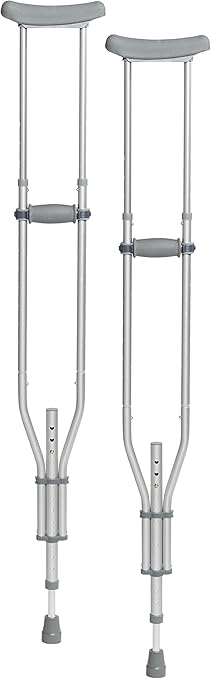
Drive Medical Crutches
Lightweight and adjustable. These help distribute your weight so your spine doesn’t have to carry the full load while healing.
Check Price on Amazon →Use a Grabber Tool
Since you cannot bend over, how do you pick up the remote or your phone? You use a grabber. This simple tool saves you from agonizing pain and protects your spine from re-injury.

32″ Grabber Reacher Tool
Extra long and lightweight. Perfect for picking up trash or dropped items without bending your back.
Check Price on Amazon →Daily Moves: Sitting and Sleeping
You can’t walk 24/7. You need to rest. But sitting and lying down can be tricky with a broken back.
How to Sit with a Fractured Vertebrae
Sitting puts more pressure on your spine than standing.
- Choose a firm chair: Soft sofas are the enemy. They make you sink and round your back.
- Use a lumbar pillow: Support the curve of your lower back.
- Feet flat: Keep feet flat on the floor to support your weight.
- Limit time: Do not sit for more than 30 minutes at a time. Get up and pace around.
Sleeping and The “Log Roll”
Getting in and out of bed is the most common time people hurt themselves. You must use the “Log Roll” technique. This keeps your spine straight while you move.
- Lie on your side.
- Keep your knees together.
- Push up with your arms while swinging your legs off the bed at the same time.
- Move your body as one unit (like a log).
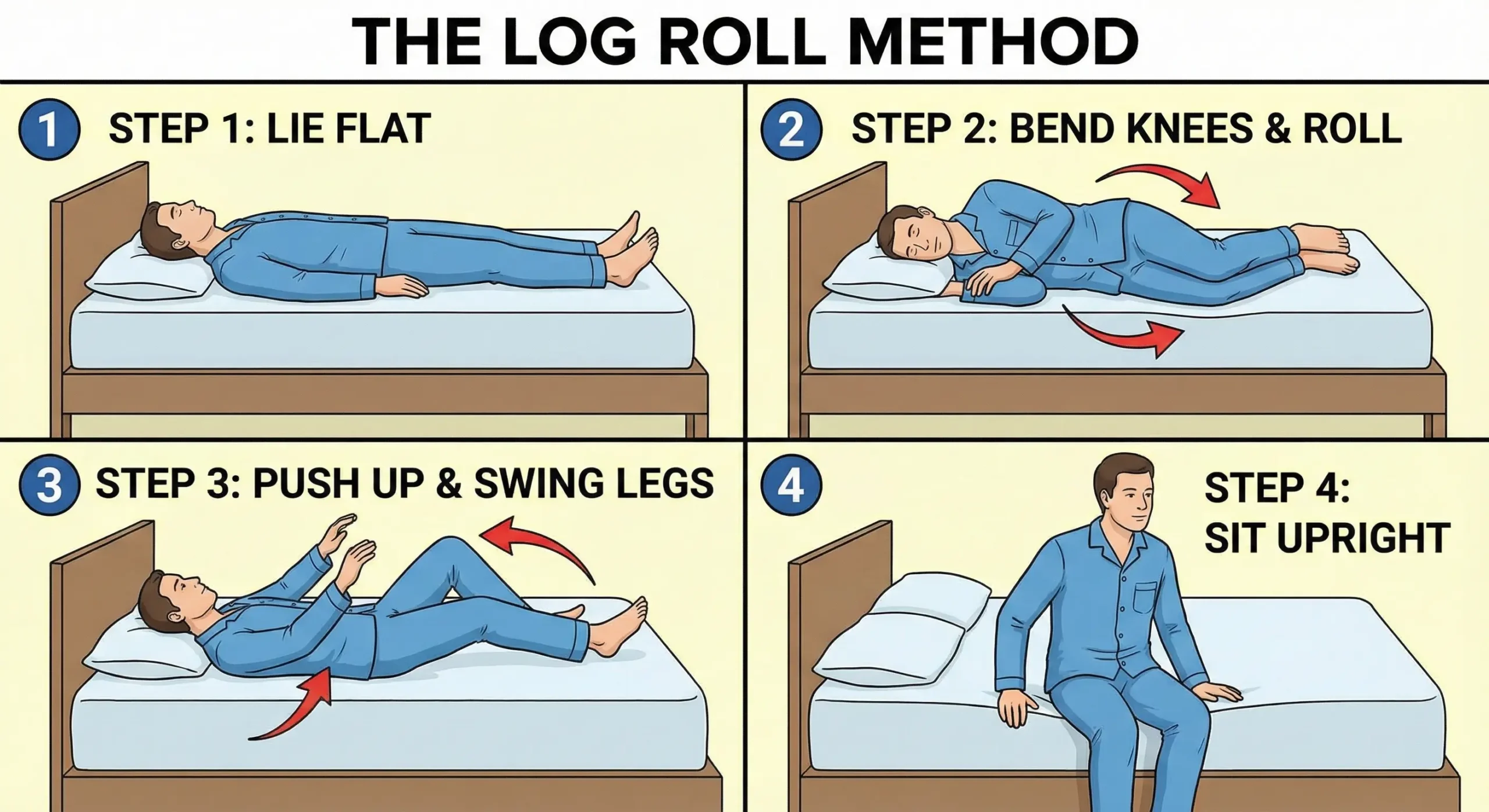
The Log Roll method prevents spinal twisting.
Fuel Your Bones for Repair
Walking stimulates the bone, but your body needs raw materials to rebuild it. Especially if you have osteoporosis, your diet plays a huge role in recovery.
Calcium and Vitamin D are non-negotiable. Calcium builds the bone, and Vitamin D helps your body absorb that calcium.

Calcium Citrate + D3 Maximum
Essential supplements for bone density recovery. Highly recommended for post-fracture healing.
Check Price on Amazon →Summary: Listen to Your Body
Recovery takes time. Usually, a spinal fracture takes about 8 to 12 weeks to heal.
- Walk daily: Short, frequent walks are best.
- Stop if it hurts: Pain is your warning signal.
- No BLT: Bending, Lifting, Twisting.
- Use your gear: Wear your brace and use your grabber.
You will get through this. Take it one step at a time.

Tariqul
Tariqul is a dedicated health and wellness blogger with a background in health sciences. With years of experience in patient education and health communication, he focuses on providing accurate, easy-to-understand information to help readers make informed decisions about their well-being. Passionate about bridging the gap between clinical knowledge and everyday life, Tariqu ensures his content is both practical and medically sound.