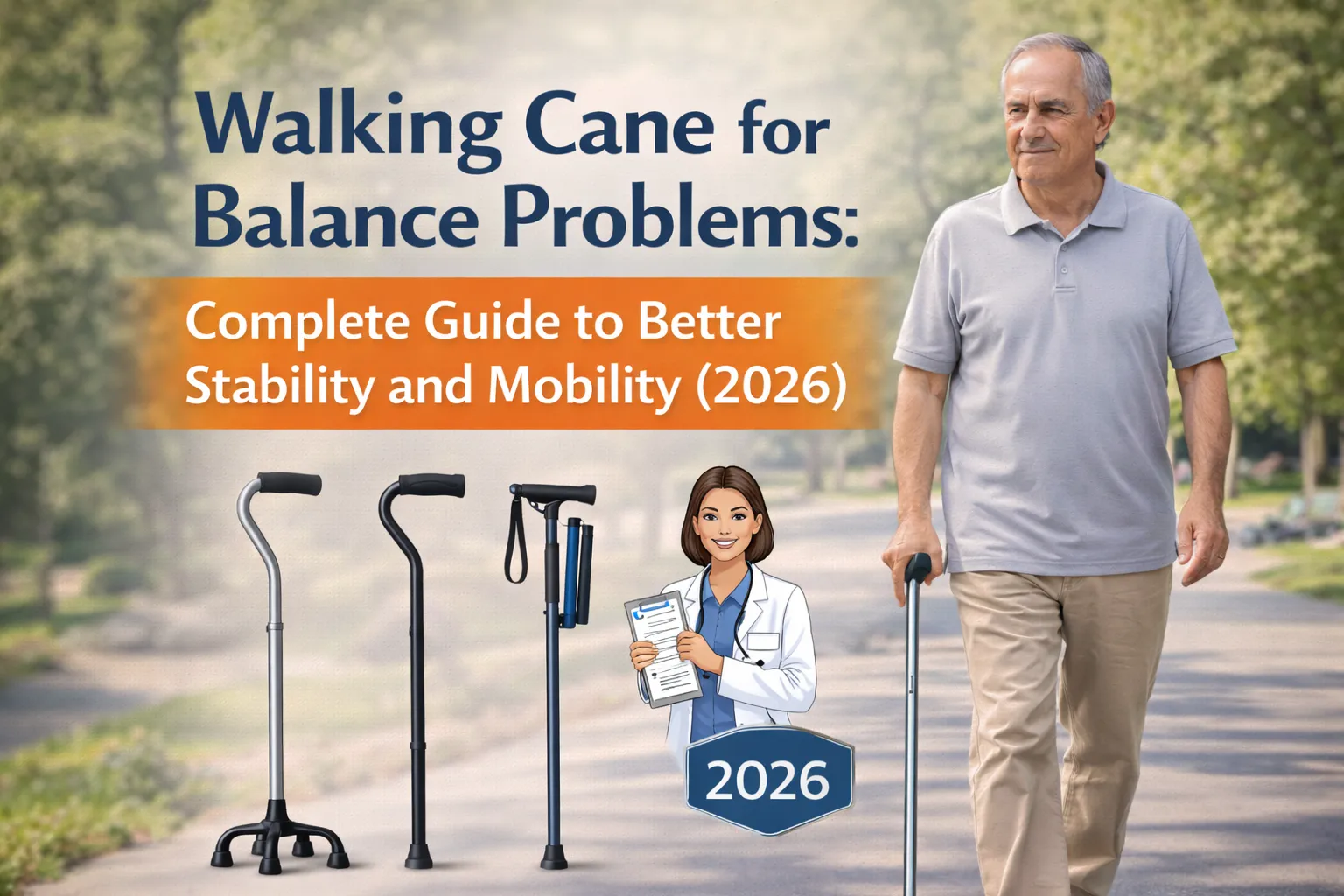
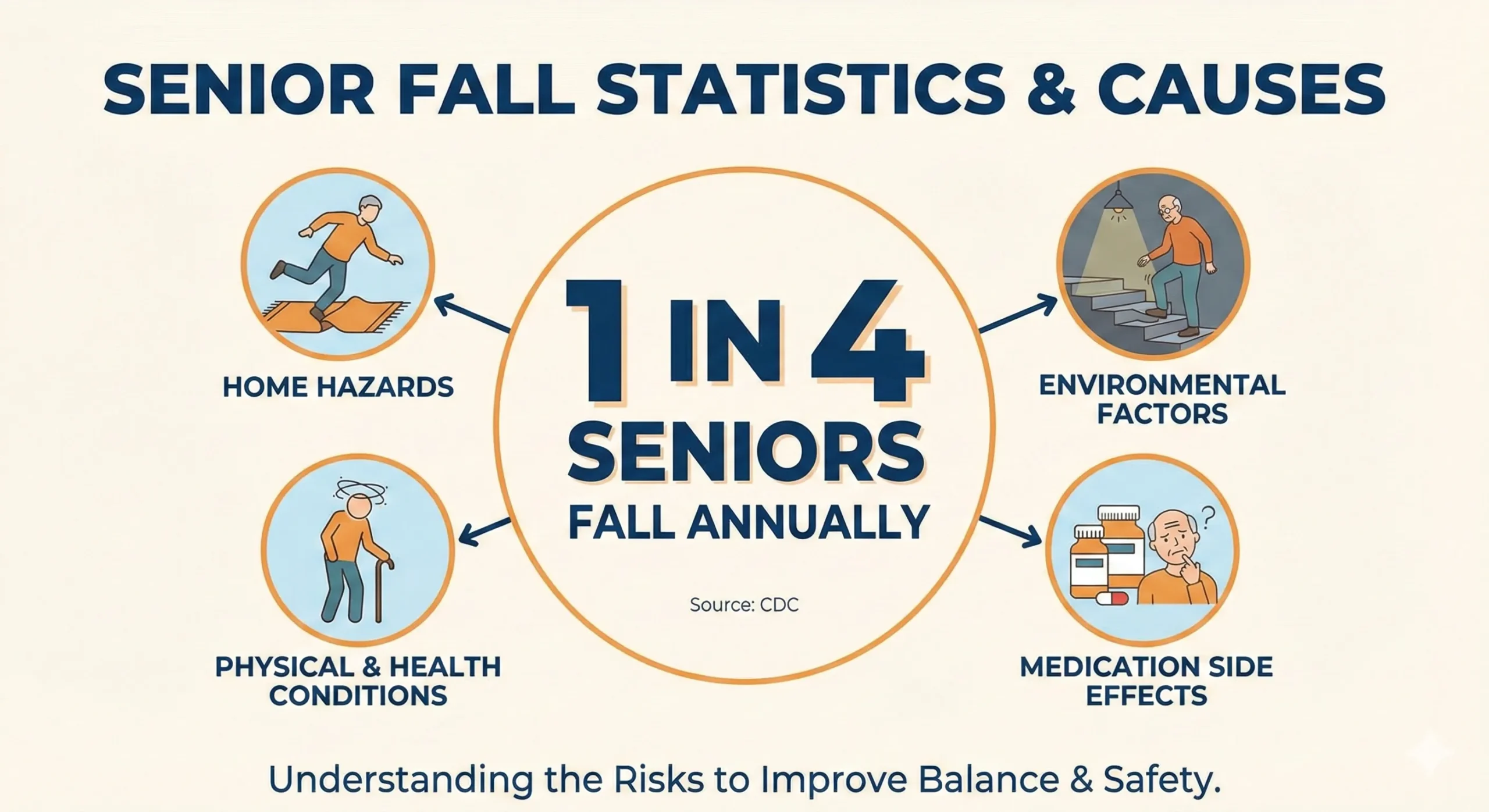
Balance problems affect millions of Americans every day. One in four people over 65 experiences a fall each year. These falls often happen because of balance issues, not just accidents.
Many people develop balance problems from various causes. Neuropathy makes your feet feel numb. Injuries can weaken your legs. Age naturally affects your stability. Medical conditions like vertigo make you feel dizzy.
A walking cane can change everything. This simple tool gives you back your confidence. You can walk to the mailbox again. Grocery shopping becomes less scary. You feel steady on your feet.
Walking canes work in three ways. They create a wider base of support under you. They take weight off your weak or injured leg. They send signals to your brain about where the ground is.
This guide covers everything you need to know about walking canes for balance. You’ll learn which type works best for your situation. We’ll show you how to walk properly with a cane. You’ll discover what Medicare covers and what it doesn’t.
Most importantly, you’ll see that using a cane isn’t giving up. It’s taking control of your mobility back.
Can Walking Canes Help with Balance Issues?
Yes, walking canes absolutely help with balance problems. The science is clear on this.
The Science Behind Cane Support
Your body naturally uses three points of contact for stability. Without a cane, you only have two feet. A cane creates that crucial third point. This forms a triangle of support under your body.
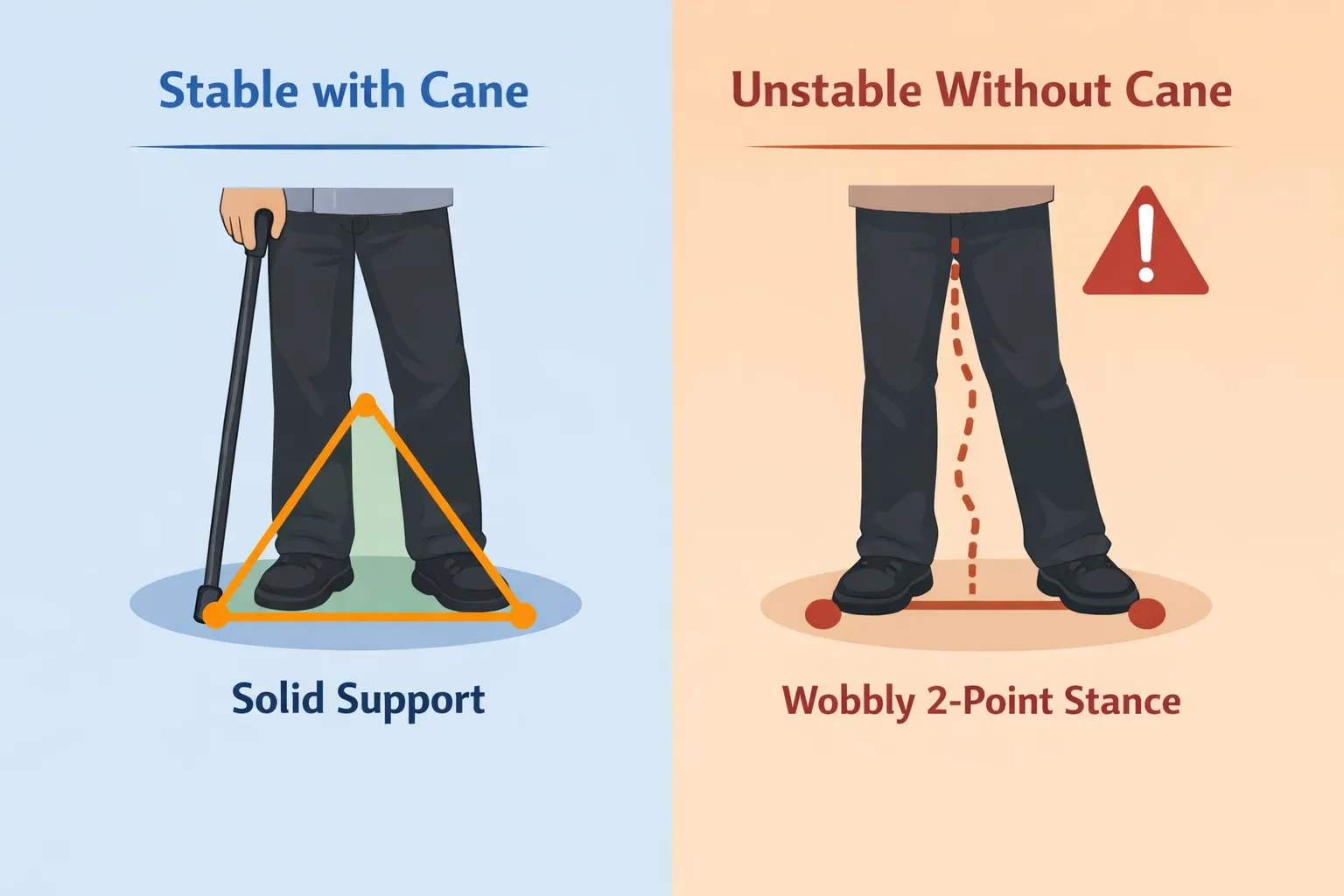
Medical studies show canes reduce fall risk by 23%. The cane takes 20-25% of your body weight off your legs. This extra support makes a huge difference when you have balance problems.
Canes also provide what doctors call “proprioceptive feedback.” This means your brain gets extra information about where you are in space. The cane touching the ground sends signals up through your arm. Your brain uses these signals to help keep you upright.
Who Benefits Most
- People with neuropathy see major improvements with canes. When your feet can’t feel the ground properly, the cane becomes your extra sensor. It tells your brain what your numb feet cannot.
- Post-injury recovery patients rely on canes during healing. A broken ankle or knee surgery weakens your leg temporarily. The cane supports you while your strength returns.
- Elderly people with general weakness gain confidence with canes. Muscle loss happens naturally with age. A cane compensates for this lost strength.
- Those with vertigo or dizziness conditions find canes essential. When your inner ear sends mixed signals, the cane provides steady reference point.
The key is choosing the right type of cane for your specific balance problem.
Types of Walking Canes for Balance and Stability
Different balance problems need different cane solutions. The wrong cane can actually make your balance worse.
Quad Canes (Four-Point Base)
Quad canes have four feet instead of one. They provide the most stability of any cane type. These canes can stand upright on their own when you let go.
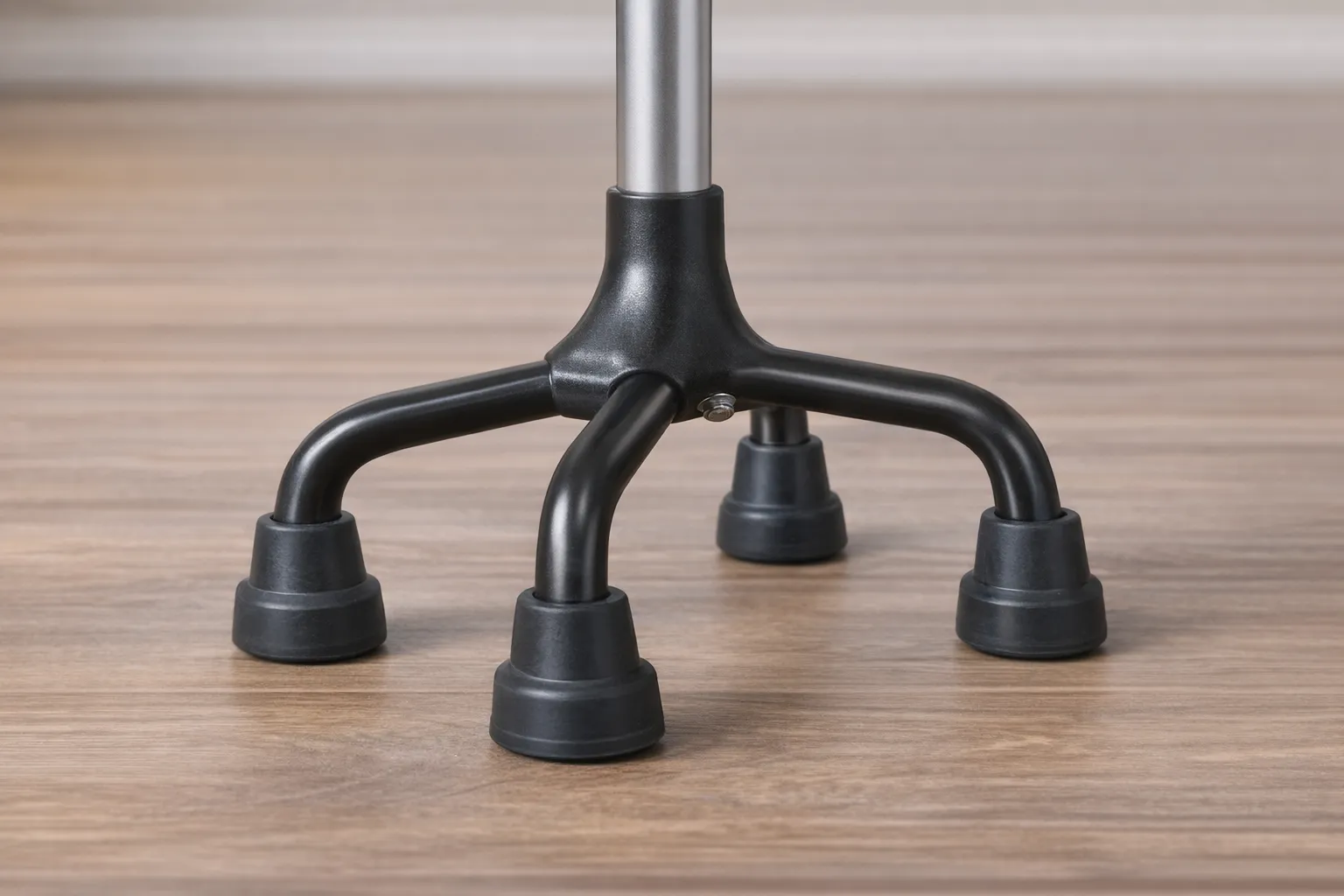
Quad canes work best for severe balance issues. Stroke survivors often start with quad canes. People with significant neuropathy benefit from the extra stability. Anyone who feels very unsteady should consider a quad cane first.
The downside? Quad canes are heavier. They move more slowly than single-point canes. You can’t use them on stairs easily.
Offset Handle Canes
Offset handle canes have a curved handle that sits directly over the shaft. This design puts your weight straight down through the cane. Regular canes with curved handles put weight at an angle.
Top Rated Offset Handle Canes


These canes reduce wrist strain significantly. They provide better balance than standard curved-handle canes. Most people find them comfortable for all-day use.
Offset handle canes work well for daily activities. People with arthritis prefer them. Anyone who needs a cane regularly should consider this style.
Folding Canes
Folding canes collapse into sections for easy storage. They provide the same stability as regular single-point canes. The folding mechanism doesn’t affect their strength.
These canes shine for occasional use. You can keep one in your car for long shopping trips. They fit in purses or backpacks easily.
Active seniors love folding canes for travel. You get the support when you need it. The cane disappears when you don’t.
Standard Single-Point Canes
Basic single-point canes are the most common type. They’re lightweight and affordable. Most people start with this style.
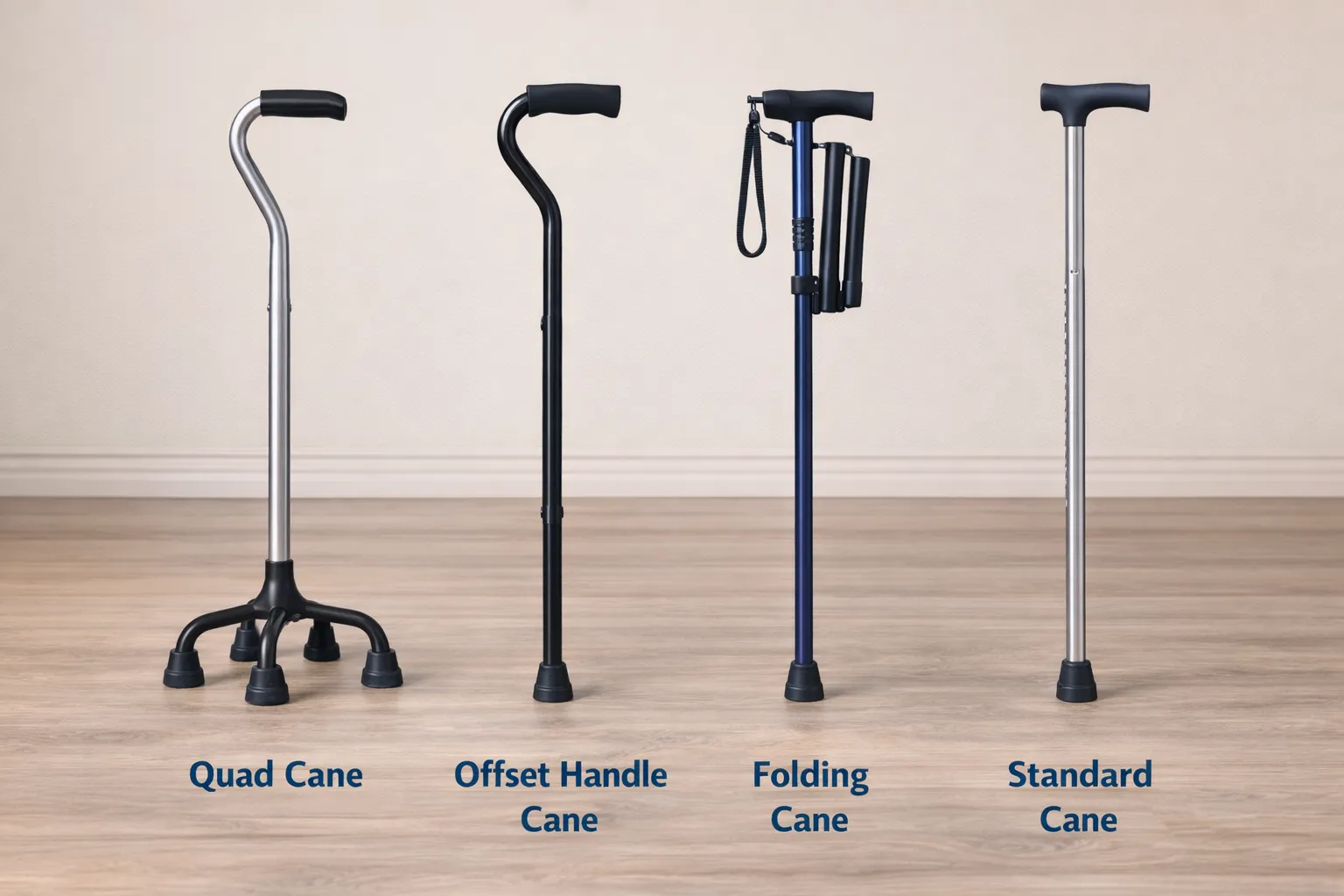
Single-point canes work well for mild balance problems. They’re easy to maneuver in tight spaces. You can use them on stairs without trouble.
However, they provide the least stability. People with severe balance issues may need something stronger.
Choosing the Right Type
Your balance problem severity determines which cane type works best. Mild issues? Start with a standard cane. Moderate problems? Try an offset handle. Severe balance troubles? Go with a quad cane.
IV. How to Walk with a Cane for Balance
Using a cane correctly makes all the difference. Poor technique can hurt your balance instead of helping it.
Proper Cane Height
Cane height affects everything. Too short makes you hunch over. Too tall throws off your balance.
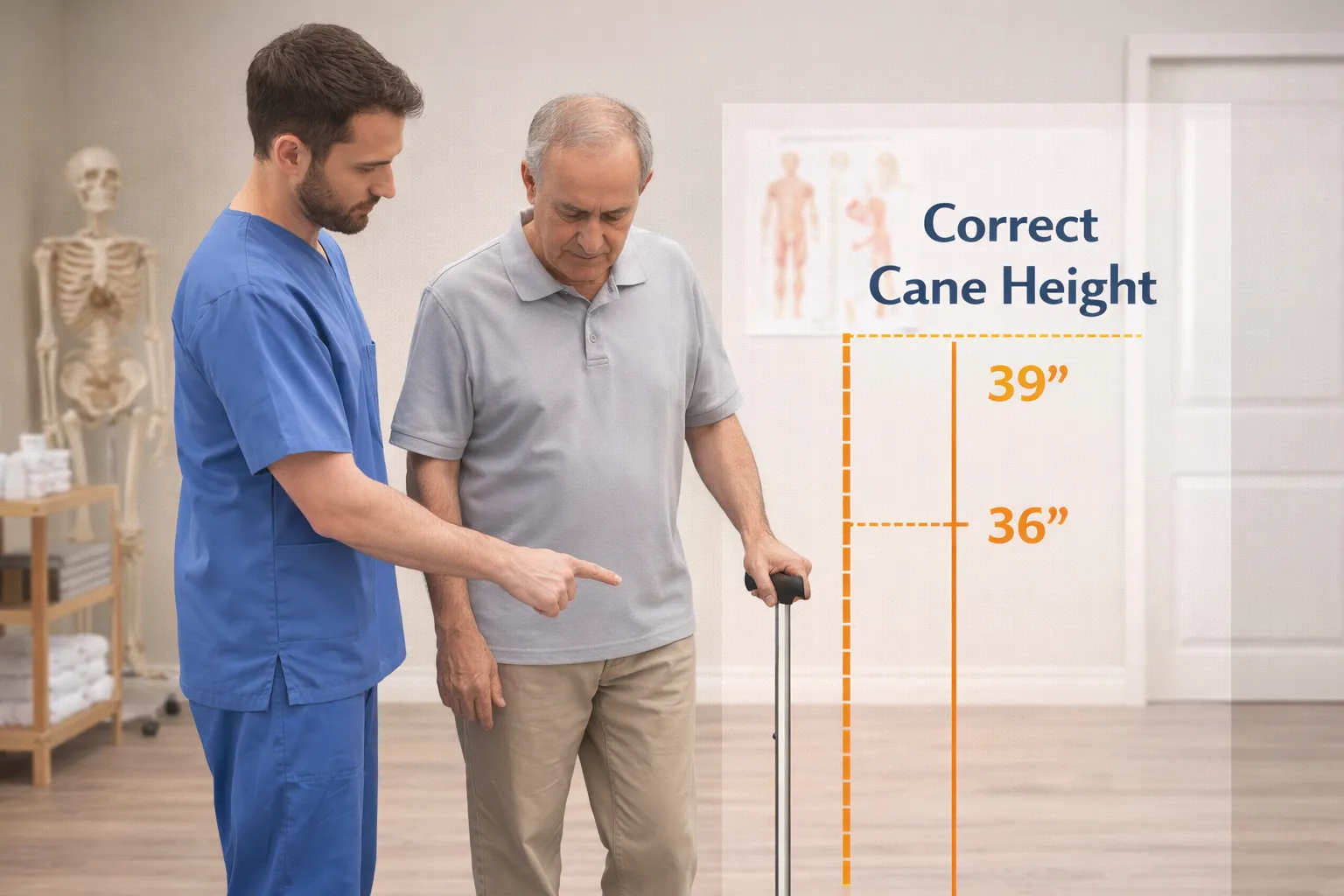
The correct height puts the handle at your wrist level when you stand naturally. Your elbow should bend 20-30 degrees when holding the cane. This creates the optimal angle for support and comfort.
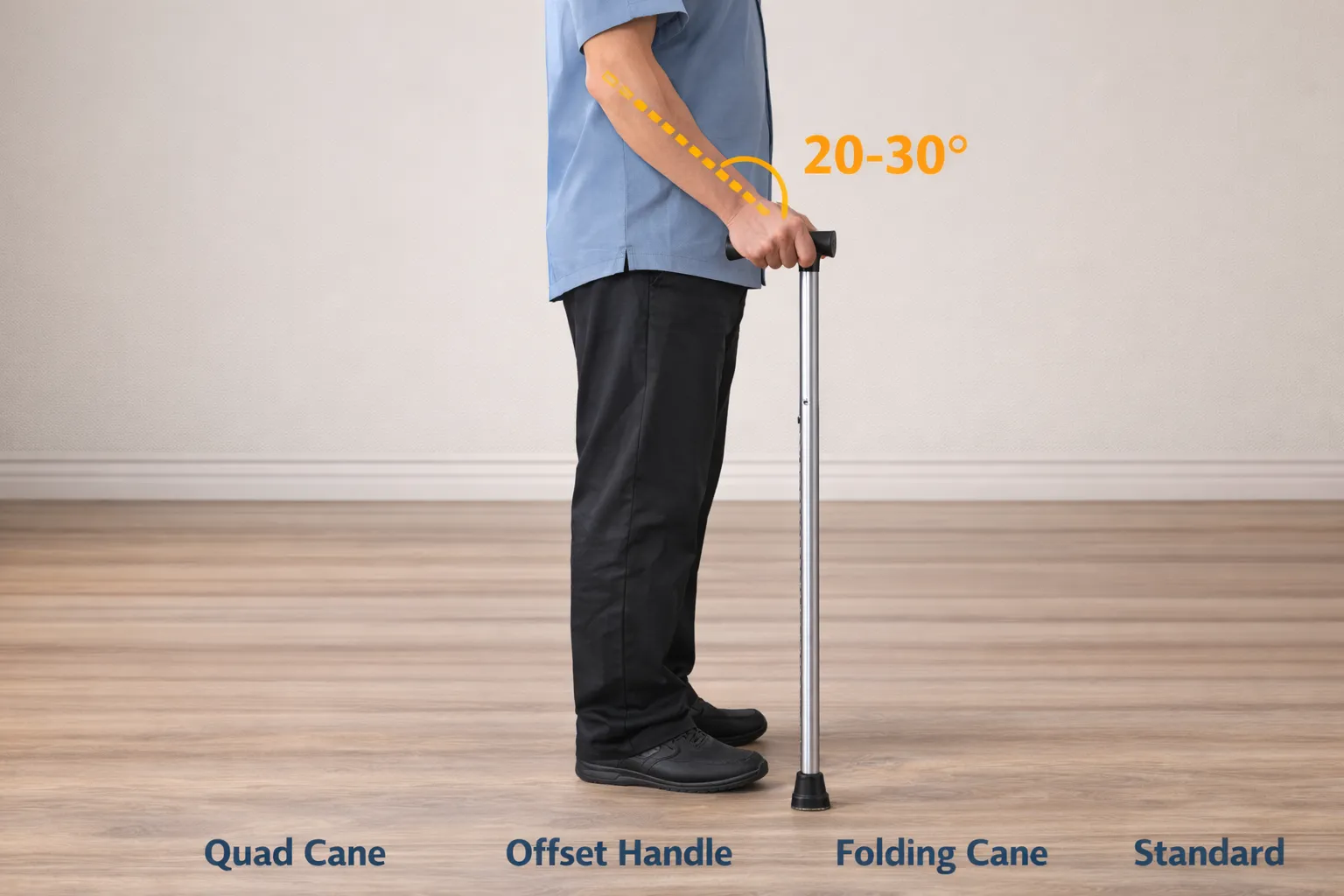
Most canes adjust in one-inch increments. Professional fitting gives you the exact right height. Many medical supply stores offer this service free.
Correct Walking Technique
Hold the cane in the hand opposite your weak or injured leg. This seems backwards but it’s correct. If your right leg is weak, hold the cane in your left hand.
Here’s the walking sequence:
- Move the cane forward at the same time as your weak leg
- Put weight on the cane as you step on your weak leg
- Step through with your strong leg
- Repeat the pattern
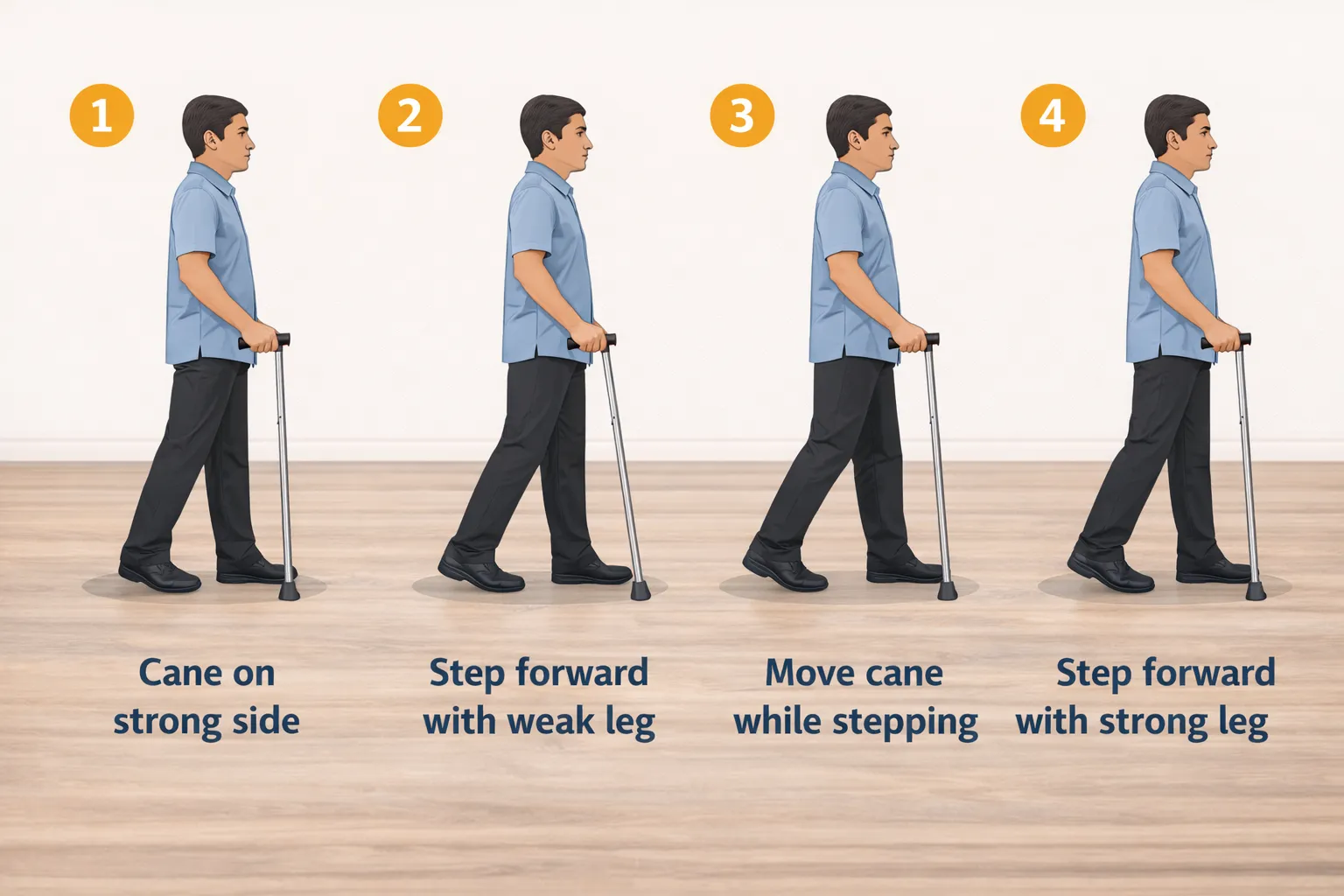
Keep the cane close to your body. Don’t reach out with it. The cane should stay within your normal stride width.
Avoiding Common Mistakes
Many people lean too heavily on their cane. This creates more problems than it solves. The cane provides support, not total weight bearing.
Keep the cane tip on the ground. Don’t lift it completely between steps. This maintains your three-point stability.
Replace worn rubber tips immediately. Smooth tips can slip and cause falls. Check your tip weekly for wear.
Use a proper grip. Don’t death-grip the handle. A firm but relaxed hold works best. Tight gripping causes hand fatigue.
Going Up and Down Stairs
Stairs require a different technique. Use the handrail when possible. The cane goes on the opposite side from the rail.
Going up: Step up with your strong leg first, then bring up your weak leg and cane together.
Going down: Lower your cane first, then step down with your weak leg, then bring down your strong leg.
Remember: “Up with the good, down with the bad.”
How to Walk with a Cane Without Limping
Smooth, even steps prevent limping. Don’t rush your weak leg. Give it time to bear weight properly with the cane’s help.
Practice the rhythm on flat surfaces first. Once you master the pattern, stairs and uneven ground become easier.
Many people limp because their cane is the wrong height. Proper fitting often eliminates limping issues.
V. Best Walking Canes for Specific Needs
Different health conditions require specific cane features. The wrong choice can make your problems worse.
Best Walking Cane for Neuropathy
Neuropathy affects your feet’s ability to feel the ground. This makes balance extremely difficult. You need maximum stability and feedback.

KingPavonini Quad Cane with Second Handle
Best For: Neuropathy & Surgery Recovery
- 4-Pronged Base for maximum ground feedback
- Second handle helps you stand up from chairs
- Foldable and adjustable
Quad canes work best for neuropathy. The four-point base gives you stability even when your feet can’t feel properly. Look for quad canes with wide bases for maximum support.
Ergonomic grips help when neuropathy affects your hands too. Foam or gel grips reduce pressure points. Some canes have adjustable grips that conform to your hand shape.
Non-slip tips are crucial. Neuropathy makes it harder to react to slips. Extra-grippy rubber tips provide security on smooth floors.
Adjustable height matters more with neuropathy. Your balance needs may change as the condition progresses. Easy adjustment mechanisms let you modify the cane as needed.
Best Walking Cane for Heavy Person
Weight capacity becomes critical for larger individuals. Standard canes often can’t handle the load safely.
Heavy-Duty Cane Recommendations


Look for canes rated at least 300 pounds. Better models handle 400-500 pounds safely. Reinforced aluminum construction provides strength without excessive weight.
Bariatric quad canes offer the best stability for heavy people. The wider base distributes weight better than single-point canes. This reduces stress on the cane shaft.
Extra-large grips accommodate bigger hands comfortably. Standard grips can feel tiny and cause cramping. Wider grips distribute pressure better.
Consider canes with reinforced tips. Heavy use wears out standard rubber tips quickly. Heavy-duty tips last longer and provide better grip.
Best Walking Cane for Elderly Woman
Elderly women often prefer lighter canes that don’t look medical. Style and comfort matter as much as function.
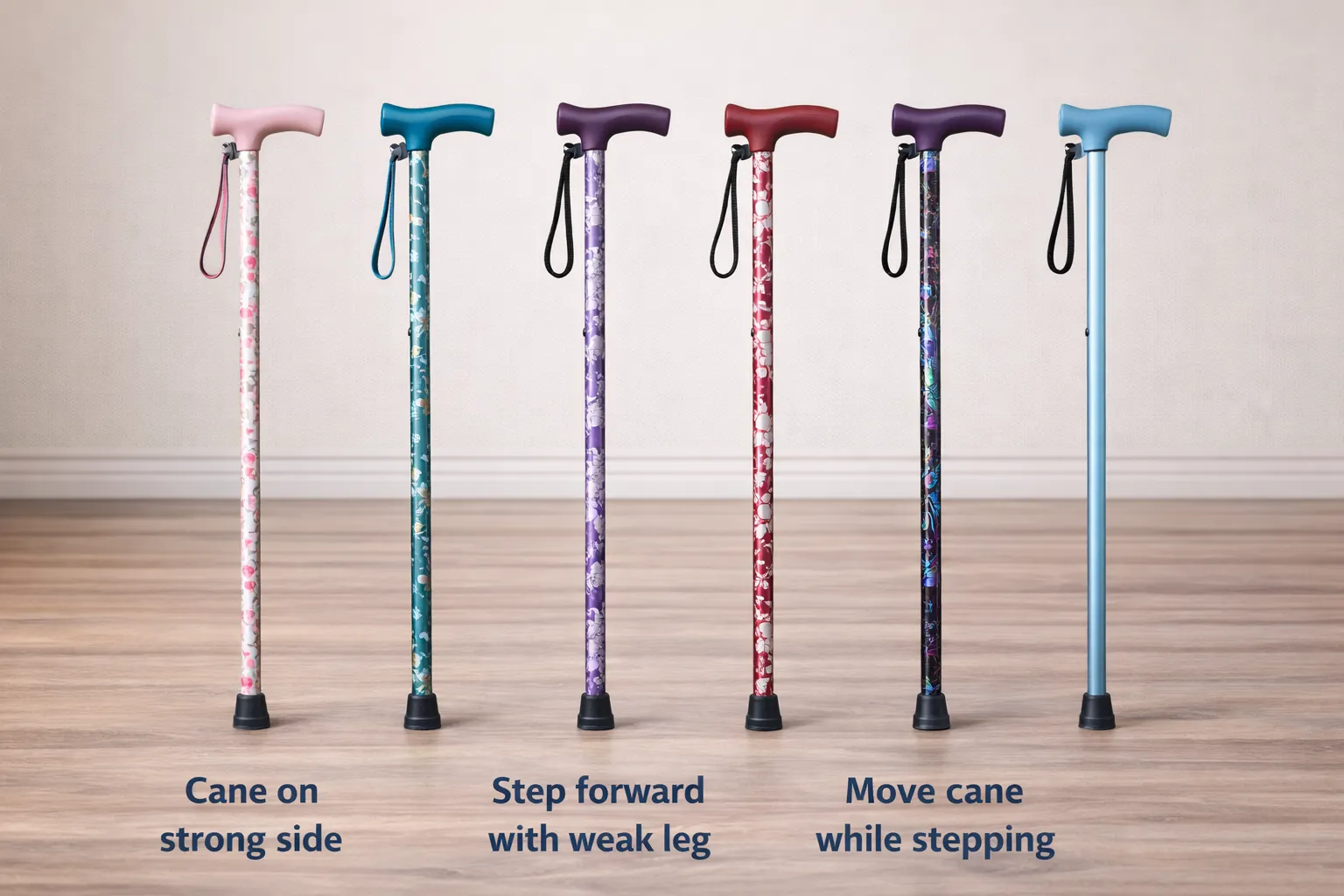
Lightweight options work best. Look for canes under one pound. Carbon fiber and lightweight aluminum provide strength without bulk.
Fashionable designs boost confidence. Canes come in patterns, colors, and decorative styles now. You don’t have to sacrifice looks for function.
Comfortable foam grips reduce hand fatigue. Elderly hands tire easily from gripping. Soft, cushioned grips make all-day use comfortable.
Easy-adjust mechanisms help when arthritis affects hand strength. Tool-free height adjustment lets you modify the cane without help.
Folding options work well for social situations. Many elderly women worry about the stigma of using a cane. Folding canes can disappear when not needed.
Walking Stick or Cane for Balance
Walking sticks and canes serve different purposes. Confusion about this leads to poor choices.
Walking sticks are designed for hiking and outdoor activities. They’re longer and meant for rough terrain. The grip and tip design focus on traction, not stability.
Medical canes are shorter and designed for balance support. The handle shape distributes weight properly. The tip provides stability on smooth surfaces.
For balance problems, choose a medical cane. Walking sticks don’t provide the right kind of support for medical conditions.
VI. Disadvantages of Using a Cane
Canes aren’t perfect solutions. Honest discussion of drawbacks helps you make informed decisions.
Physical Drawbacks
Arm and shoulder fatigue happens with extended use. Your arm muscles aren’t used to supporting body weight. This fatigue is temporary for most people. Strength builds with regular use.
Hand cramping can occur with poor grip technique. Death-gripping the handle causes problems. Proper grip training eliminates most cramping issues.
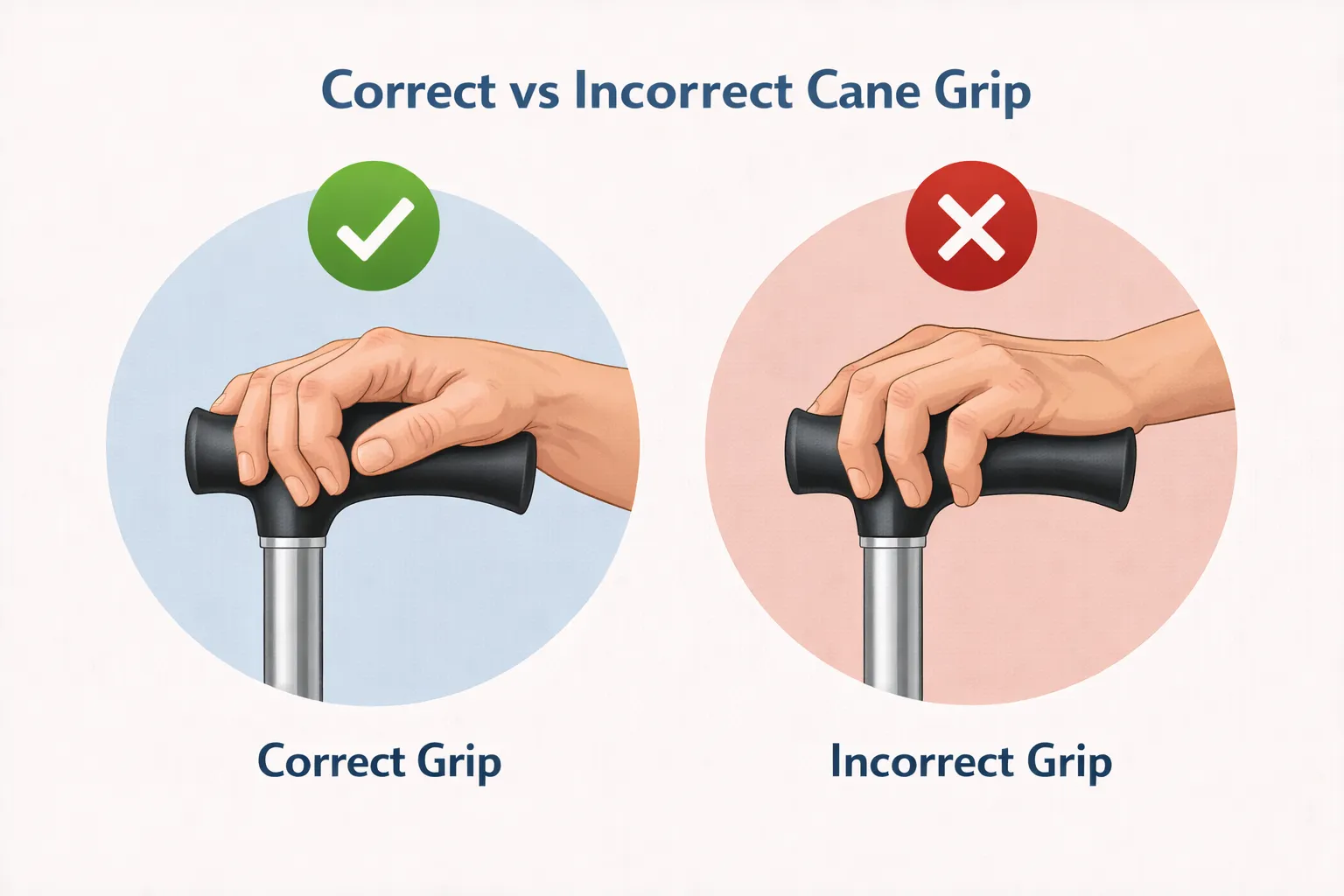
Back strain sometimes develops from poor cane height. Too-short canes make you hunch over. Too-tall canes throw off your posture. Proper fitting prevents these issues.
Social and Emotional Concerns
Many people worry about looking disabled or old. Society sometimes stigmatizes mobility aids. These concerns are real and valid.
Some fear becoming dependent on the cane. They worry they’ll never walk without it again. Often, canes are temporary aids during recovery.
Practical Limitations
- Canes require one hand constantly. This limits your ability to carry things. You need to plan activities differently.
- Tight spaces become more challenging. The cane takes up additional width. Crowded areas can be difficult to navigate.
- Stairs remain challenging even with a cane. You still need good technique and strength. Some stairs may be too difficult regardless.
Minimizing the Negatives
Proper training reduces most physical problems. Physical therapists teach correct techniques. This training prevents fatigue and strain.
Modern cane designs address style concerns. Fashionable options don’t look medical. You can find canes that match your personality.
Focus on what you gain, not what you lose. Canes provide independence and confidence. They let you do activities safely that were becoming impossible.
Reddit Community Insights
Users on r/disability share honest experiences with canes. Many report initial resistance followed by relief at improved mobility. The community emphasizes that mobility aids provide freedom, not limitations.
One user shared: “I fought using a cane for months. Once I started, I wondered why I waited so long. I can actually go places again.”
Another noted: “The hardest part was getting over my pride. Now I realize my cane gives me confidence to do more, not less.”
Does Medicare Pay for Walking Canes?
Medicare coverage for canes follows specific rules. Know these rules before you buy to avoid surprise costs.
Medicare Part B Coverage
Medicare Part B covers 80% of approved walking canes. This coverage applies after you meet your annual deductible. You pay the remaining 20% plus any amount above Medicare’s approved cost.
A doctor’s prescription is required for Medicare coverage. The prescription must state that the cane is medically necessary for your condition. Generic prescriptions often don’t provide enough detail.
Your doctor must accept Medicare assignment for full coverage benefits. If they don’t accept assignment, you may pay more out-of-pocket.
Medical Necessity Requirements
Medicare requires documentation of your balance problem. Your medical records must show diagnoses like neuropathy, stroke recovery, or balance disorders.
The doctor must certify that you can safely use a cane. Some conditions make canes inappropriate. Your doctor needs to confirm you have adequate arm strength and cognitive ability.
Medicare distinguishes between standard canes and “designer” models. They cover basic medical canes but not decorative or luxury versions. The coverage focuses on medical necessity, not preferences.
Approved Supplier Requirements
You must purchase from Medicare-approved suppliers for coverage. Not all medical supply stores accept Medicare. Verify approval status before buying.
Online suppliers can be Medicare-approved. Many offer competitive prices and home delivery. Check their Medicare status on the Medicare website.
Some pharmacies sell Medicare-approved canes. Chain pharmacies often participate in Medicare programs. This can be more convenient than specialty suppliers.
Documentation Tips
Keep all medical records related to your balance problems. Medicare may request documentation for coverage approval. Complete records speed up the process.
Get detailed prescriptions from your doctor. Vague prescriptions like “walking aid” may not qualify. Specific prescriptions like “quad cane for neuropathy balance issues” work better.
Save all receipts and insurance paperwork. Medicare coverage can be complex. Good records help resolve any payment issues.
What Medicare Doesn’t Cover
Medicare typically doesn’t cover replacement canes unless your condition changes significantly. Lost or broken canes usually aren’t covered unless it’s due to normal wear.
Upgrade canes for comfort or style reasons aren’t covered. Medicare focuses on medical necessity, not preferences. You’ll pay full price for upgrades.
Multiple canes aren’t usually covered. One cane per medical need is the standard. Backup canes or travel canes come out-of-pocket.
What is the Best Mobility Aid for Poor Balance?
Balance problems range from mild to severe. Different levels require different mobility solutions.
Assessing Your Balance Level
Mild balance issues mean you feel slightly unsteady sometimes. You can walk independently but worry about falls in certain situations. Single-point canes often work well for mild problems.
Moderate balance problems affect your confidence significantly. You avoid certain activities due to fall fears. You may have fallen once or twice. Quad canes or offset handle canes provide appropriate support.
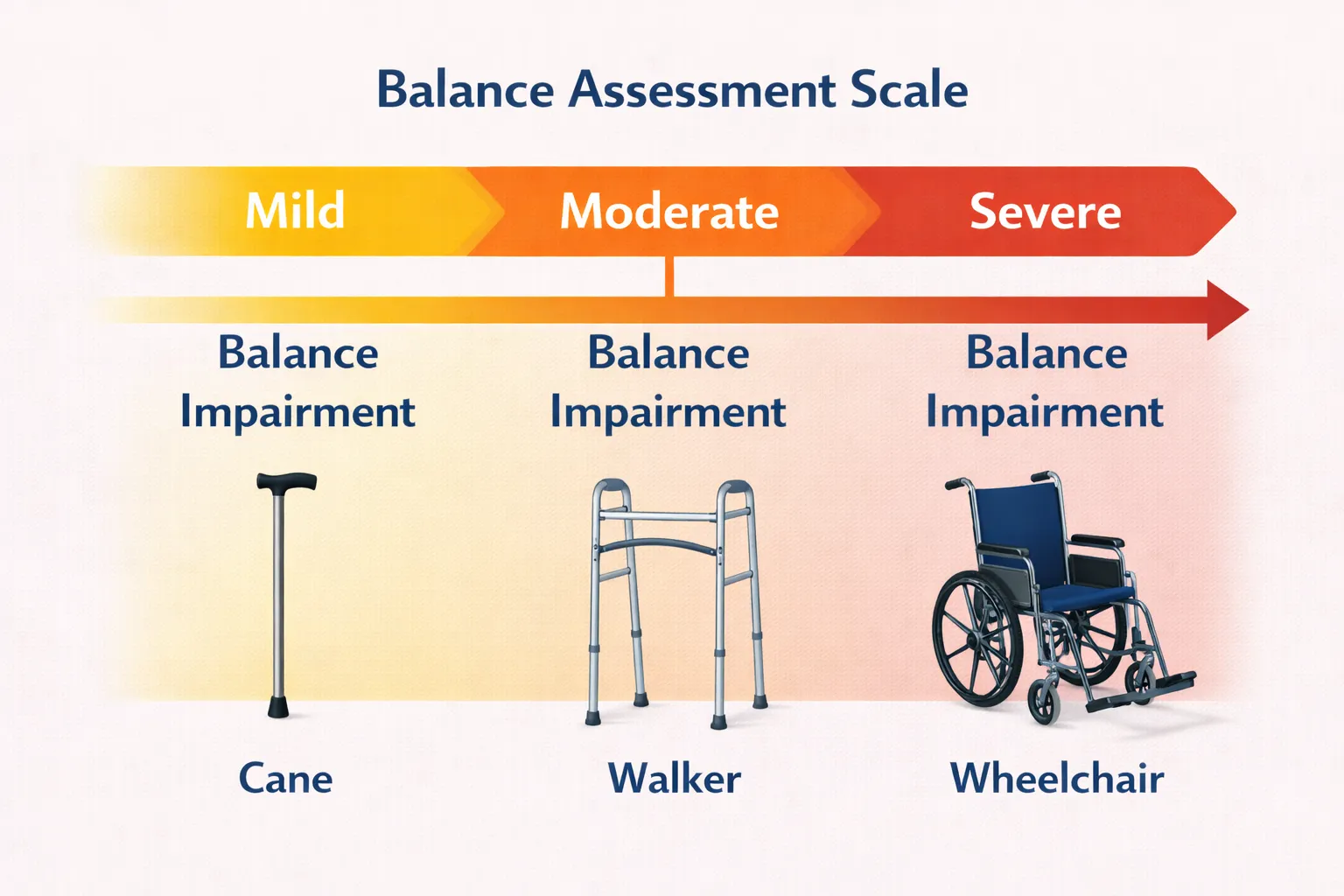
Severe balance issues make walking scary or dangerous. You may have fallen multiple times. Standing still feels unstable. Walkers or rollators might be necessary instead of canes.
Single-Point Canes for Mild Issues
Standard canes work when you need occasional support. They’re lightweight and easy to maneuver. You can navigate stairs and tight spaces easily.
Folding canes work well for situational use. Keep one for long shopping trips or uneven terrain. They provide support when needed without being cumbersome.
Quad Canes for Moderate Problems
Four-point bases provide significant extra stability. They’re ideal when single-point canes don’t feel secure enough. Quad canes work well for people who feel unsteady frequently.
These canes move more slowly than single-point versions. They require more space to maneuver. The trade-off is worth it for better stability.
Walkers for Severe Balance Problems
Standard walkers provide maximum stability. You have four points of contact with the ground. Both hands grip the walker for security.
Walkers work best indoors on smooth surfaces. They’re harder to use on uneven ground. Stairs become very difficult with walkers.
Rollators for Active Severe Cases
Rollators have wheels and brakes. They move more smoothly than standard walkers. Most include seats for resting.
These work well for people who need walker-level stability but want more mobility. The wheels make movement easier over longer distances.
Professional Assessment Helps
Physical therapists can assess your specific balance needs. They test your stability in various situations. This assessment guides mobility aid selection.
Occupational therapists evaluate how balance problems affect daily activities. They recommend aids that fit your lifestyle needs.
When to Upgrade Your Aid
Start with the least restrictive aid that keeps you safe. You can always upgrade if your needs change. Many people progress through different aids as conditions change.
Don’t downgrade too quickly during recovery. It’s better to use more support than needed than to risk a fall. Your confidence is as important as your physical stability.
IX. How to Use a Walking Stick After Injury
Injury recovery requires special cane considerations. Temporary needs differ from permanent balance problems.
Post-Injury Assessment
Fresh injuries need professional evaluation before cane use. Some injuries require complete non-weight bearing. Others allow partial weight with cane support.
Your doctor will specify weight-bearing restrictions. “Non-weight bearing” means no weight on the injured leg. “Partial weight bearing” allows some weight with support. “Full weight bearing as tolerated” means use the cane for comfort only.
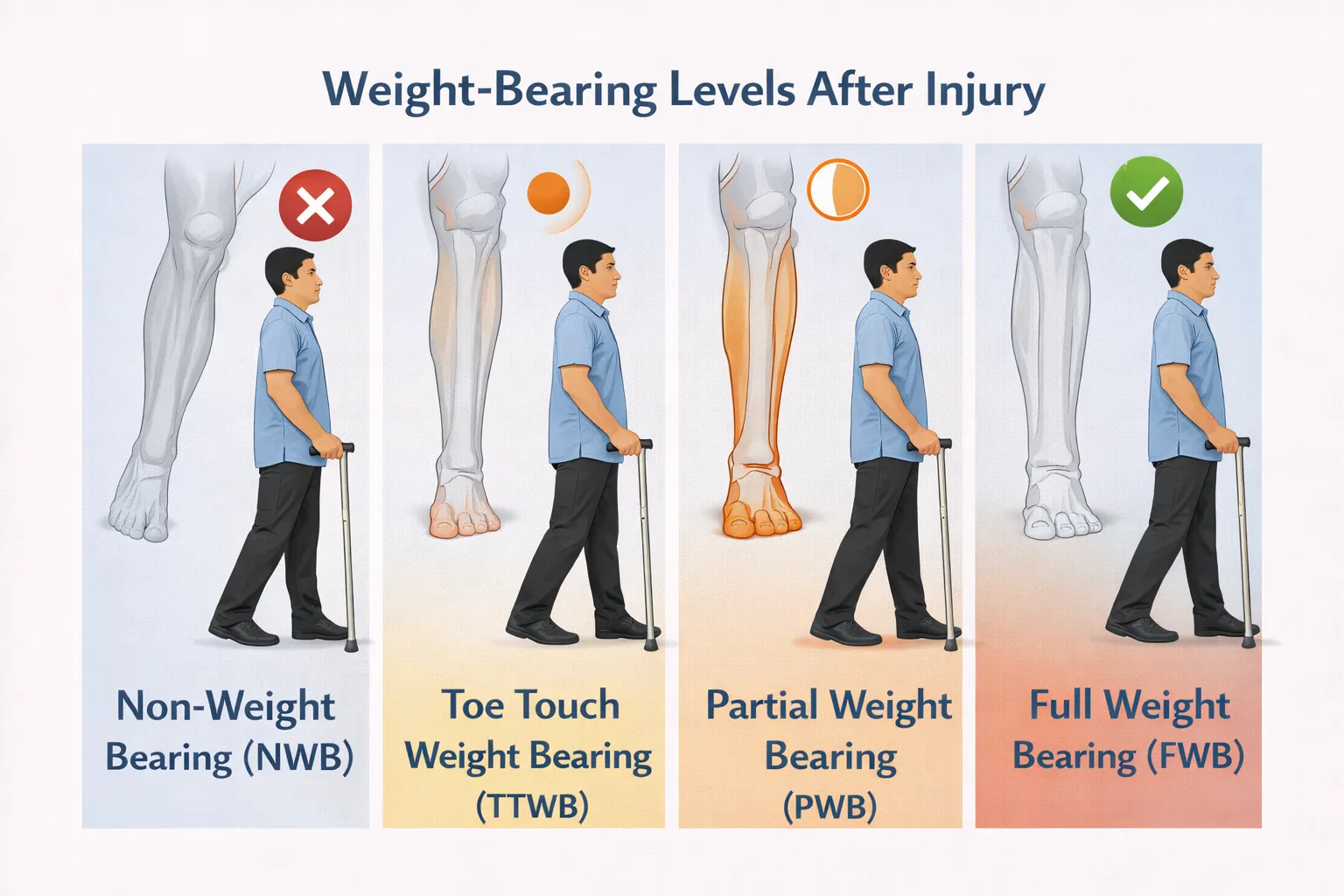
Fractures, sprains, and surgical sites have different healing timelines. Follow medical guidelines strictly to avoid re-injury.
Starting Cane Use After Injury
Begin with professional instruction when possible. Physical therapists teach proper techniques for your specific injury. This prevents compensation injuries in other body parts.
Start on level, non-slip surfaces. Master the basic walking pattern before attempting stairs or uneven ground. Rushing progression increases fall risk.
Expect fatigue initially. Your body works harder to compensate for the injury. Rest breaks prevent overexertion and maintain safety.
Gradual Weight-Bearing Increase
Most injuries heal through phases of increasing weight bearing. Your cane use will change as healing progresses.
- Early phase: Maximum cane support with minimal weight on injured leg. The cane bears most of your body weight on that side.
- Middle phase: Moderate cane support as the injured leg strengthens. You’ll feel more confident putting weight on the healing limb.
- Late phase: Light cane support for confidence more than necessity. The injury has healed but you’re still cautious.
Temporary vs. Permanent Use
Most post-injury cane use is temporary. As healing completes, you’ll gradually reduce cane dependence. Full recovery often means no cane needed.
Some injuries result in permanent changes. Severe fractures or nerve damage may require ongoing cane use. Accept this reality early in recovery.
Don’t rush to abandon the cane. Using it longer than necessary is safer than stopping too soon. Your confidence matters as much as your physical healing.
Quora Insights from Physical Therapists
Physical therapy professionals on Quora emphasize patience during recovery. One therapist shared: “Patients often want to ditch the cane too quickly. I tell them the cane is insurance against re-injury.”
Another noted: “The psychological aspect of recovery matters. If the cane gives you confidence to move, keep using it until that confidence becomes natural.”
Recovery specialists stress that setbacks are normal. Don’t get discouraged if some days feel harder than others. Healing isn’t always linear.
Exercise During Cane Use
Gentle exercises can speed recovery while using a cane. Focus on maintaining strength in uninjured areas. Ask your physical therapist for appropriate exercises.
Balance training helps even with cane use. Practice standing on your good leg. Work on proprioception as your injury allows.
Don’t neglect your arms and core. These areas work harder when you use a cane. Strengthening them reduces fatigue and strain.
X. Expert Tips and Professional Recommendations
Medical professionals see cane users daily. Their insights can help you avoid common problems and maximize benefits.
Physical Therapist Insights
Proper fitting prevents 90% of cane-related problems. Many people guess at height or use inherited canes. Professional fitting takes minutes but saves months of discomfort.
Regular technique reviews catch developing bad habits. Schedule follow-up appointments even after you feel comfortable. Small technique errors compound over time.
Strength exercises complement cane use effectively. Your supporting arm needs conditioning. Core stability exercises improve overall balance. These exercises reduce your dependence on the cane over time.
Upper body strengthening focuses on shoulders and arms. These muscles bear extra load when using a cane. Stronger muscles reduce fatigue and strain.
Balance training continues even with cane use. Practice standing on one foot. Work on uneven surfaces as appropriate. Balance skills improve your confidence and safety.
Doctor Recommendations
Annual balance assessments help track changes. Balance problems often progress slowly. Regular evaluation catches changes before they become dangerous.
Medication reviews can improve balance significantly. Many common medications affect balance. Blood pressure drugs, sleep aids, and pain medications can increase fall risk. Sometimes adjustments help more than mobility aids.
Vision and hearing checks are part of balance health. These senses contribute to stability. Correcting vision or hearing problems can reduce your need for a cane.
Home safety modifications work alongside canes. Remove throw rugs and add grab bars. Improve lighting and clear walkways. Environmental changes multiply your cane’s effectiveness.
When to Upgrade or Downgrade
- Upgrade your cane if you’ve fallen despite using it. Falls indicate your current aid isn’t providing adequate support. Don’t wait for multiple falls to make changes.
- Consider upgrading if you avoid activities due to balance fears. The cane should increase your confidence, not limit it. A more supportive cane might restore your activity level.
- Downgrade gradually as balance improves. Some conditions improve with treatment or therapy. Reduce cane support slowly to maintain confidence.
Professional Fitting Services
Many medical supply stores offer free fittings. Take advantage of these services even if buying elsewhere. Proper height and grip size make huge differences.
Physical therapy clinics often provide fittings. These professionals understand the medical aspects better than retail staff. They can recommend specific features for your condition.
Some insurance plans cover professional fittings. Check your benefits before paying out-of-pocket. Medicare sometimes covers fitting services.
Red Flags to Watch For
- Increasing pain in your supporting arm signals problems. This usually means poor technique or wrong cane height. Address arm pain quickly to prevent injury.
- New balance problems despite cane use need medical evaluation. Your underlying condition may be progressing. Don’t assume the cane is inadequate without checking for medical changes.
- Frequent trips or near-falls with your cane indicate technique problems. Review your walking pattern with a professional. Simple corrections often solve these issues.
Long-term Success Strategies
Maintain your cane properly. Replace worn tips immediately. Check adjustment mechanisms regularly. A well-maintained cane performs better and lasts longer.
Stay active within your limitations. Canes enable activity, not restrict it. Use your cane to maintain the lifestyle you want.
Connect with other cane users for support and tips. Online communities share practical advice. Local senior centers often have mobility support groups.
Frequently Asked Questions
Can walking canes help with balance issues?
Yes, walking canes significantly help with balance problems. They create a wider base of support, reducing fall risk by up to 23%. Canes redistribute weight from weak legs and provide sensory feedback to help your brain maintain balance. Medical studies confirm their effectiveness for various balance conditions.
What is the best cane for balance problems?
The best cane depends on your specific balance issue severity. Quad canes with four-point bases provide maximum stability for severe problems. Offset handle canes work well for moderate issues with daily use. Single-point canes suit mild balance problems. Professional assessment helps determine which type works best for you.
Does Medicare pay for walking canes for seniors?
Medicare Part B covers 80% of medically necessary walking canes after you meet your deductible. You need a doctor’s prescription stating the medical necessity. Purchase must be from Medicare-approved suppliers. Medicare covers basic medical canes but not luxury or decorative models. Keep all documentation for coverage approval.
What is the best mobility aid for poor balance?
The best mobility aid matches your balance problem severity. Single-point canes work for mild issues. Quad canes suit moderate problems. Walkers provide maximum stability for severe balance issues. Rollators offer walker-level stability with easier movement. Professional assessment determines which aid provides appropriate support for your specific situation.
How do I know if I need a walking cane?
You might need a walking cane if you feel unsteady while walking, have fallen recently, avoid activities due to fall fears, or have medical conditions affecting balance like neuropathy or stroke recovery. Consult your doctor if you experience any balance concerns. They can assess your fall risk and recommend appropriate mobility aids.
Can I use any cane, or do I need a specific type?
Different balance problems require specific cane types. Using the wrong cane can actually worsen your balance or cause other injuries. Quad canes provide more stability but are heavier. Single-point canes are lighter but offer less support. Professional fitting ensures you get the right type and proper height for your needs.
How long does it take to learn to use a cane properly?
Most people learn basic cane technique within a few days of practice. However, developing confidence and smooth movement takes 2-4 weeks of regular use. Professional instruction speeds up the learning process and prevents bad habits. Practice on level surfaces first before attempting stairs or uneven ground.
Will using a cane make me dependent on it forever?
Not necessarily. Many cane users need them temporarily during injury recovery or illness treatment. Some conditions improve with medical treatment or physical therapy. Others require long-term support. Focus on the independence and safety the cane provides rather than viewing it as permanent dependence.
What’s the difference between a walking stick and a medical cane?
Walking sticks are designed for hiking and outdoor activities. They’re longer and focus on traction over rough terrain. Medical canes are shorter and designed for balance support on smooth surfaces. The handle shapes and tip designs serve different purposes. For medical balance issues, choose a medical cane over a walking stick.
How often should I replace my walking cane?
Replace rubber tips every 6-12 months depending on use frequency. Replace the entire cane if the shaft bends, cracks, or shows wear. Adjustment mechanisms should work smoothly – replace canes with stuck or broken adjusters. Quality canes can last years with proper maintenance, but safety comes first if any component fails.
Conclusion and Next Steps
Balance problems don’t have to limit your life. A properly chosen and fitted walking cane can restore your confidence and independence. The key is selecting the right cane type for your specific needs.
Quad canes provide maximum stability for severe balance issues. Offset handle canes work well for daily use with moderate problems. Single-point canes suit mild balance concerns and occasional use.
Professional fitting makes the biggest difference in cane effectiveness. Proper height and technique training prevent most problems people experience with canes. Don’t guess at these important factors.
Start with the appropriate cane for your current needs. You can always upgrade or downgrade as your condition changes. The goal is maintaining safety while preserving as much independence as possible.
Medicare coverage helps reduce costs for medically necessary canes. Work with your doctor to get proper prescriptions and documentation. Choose Medicare-approved suppliers to maximize your benefits.
Remember that using a cane shows wisdom, not weakness. You’re taking control of your mobility and safety. This proactive approach keeps you active and engaged in life.
Your Next Steps:
- Consult your doctor about your balance concerns
- Get a professional cane fitting
- Start with basic technique training
- Practice regularly on safe, level surfaces
- Gradually progress to more challenging terrain
Take action today. Your improved stability and confidence are worth the effort.
Additional Resources
Professional Services
- Find physical therapists: [American Physical Therapy Association website]
- Medicare supplier directory: [Medicare.gov supplier locator]
- Balance disorder specialists: [Vestibular Disorders Association]
Exercise Programs
- Fall prevention exercises from CDC
- Balance training videos for seniors
- Strength programs for cane users
Emergency Contacts
Keep your doctor’s number and local emergency services easily accessible. Balance problems can change quickly, and professional help should always be available.
Support Communities
- Reddit r/disability community for mobility aid users
- Local senior center balance and mobility groups
- Online forums for specific conditions like neuropathy or stroke recovery

Tariqul
Tariqul is a dedicated health and wellness blogger with a background in health sciences. With years of experience in patient education and health communication, he focuses on providing accurate, easy-to-understand information to help readers make informed decisions about their well-being. Passionate about bridging the gap between clinical knowledge and everyday life, Tariqu ensures his content is both practical and medically sound.