The Scenario: You dropped something heavy. Or you landed wrong. You stood up, took a step, and winced. But you did take that step.
The Big Question: “If I can walk on it, it’s not broken, right?”
The Short Answer: False. You absolutely can walk on a broken foot. Adrenaline is powerful. It masks the pain. But doing so is dangerous.
The Reality: Walking on a minor fracture can turn a simple 6-week recovery into a 6-month nightmare.
Table Of Contents
- 1 Why You Can Walk (Even If It Is Broken)
- 2 Broken vs. Sprained: How to Tell the Difference
- 3 The Risks: What Happens If You Keep Walking?
- 4 Specific Scenarios: From “Walking Boot” to “Barefoot”
- 5 Immediate Treatment (Before the Doctor)
- 6 Recovery Timeline: When Will You Walk Normally?
- 7 Frequently Asked Questions (FAQ)
- 8 Final Verdict: Don’t “Walk It Off”
Why You Can Walk (Even If It Is Broken)
Your body fights the pain initially. Adrenaline floods your system. This fools you into thinking the injury is “just a bruise.”
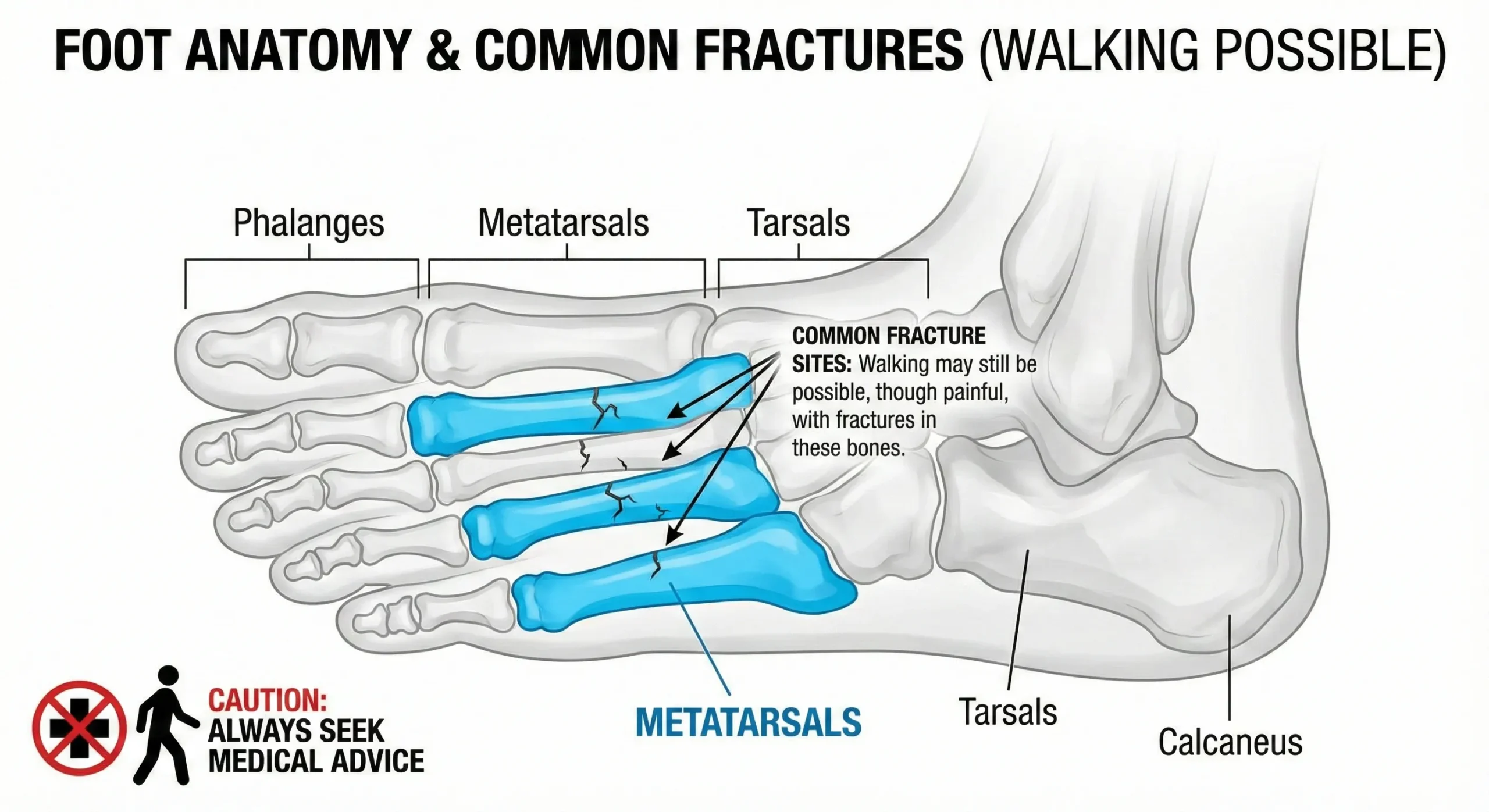
The “Non-Weight Bearing” Bone: Not all foot bones carry your full weight. You might have broken a toe or a metatarsal (the long bones on top of your foot). These breaks often allow you to limp, even though the bone is snapped.
Hairline Fractures: These are tiny cracks in the bone. They hurt, but the bone structure is still holding together… for now. If you keep walking, that crack can become a full break.
Broken vs. Sprained: How to Tell the Difference
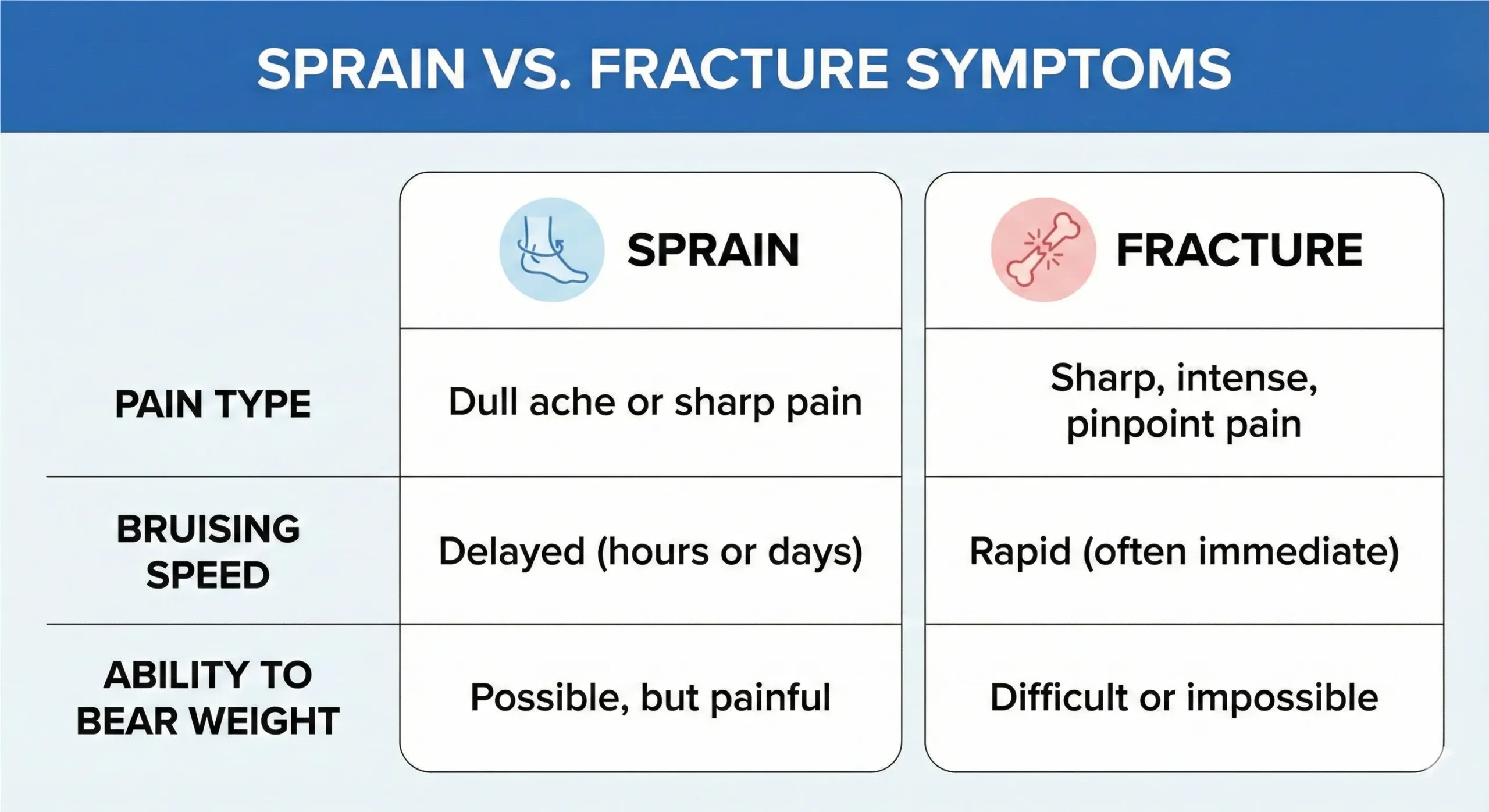
Both hurt. Both swell. Both make walking hard. It is difficult to tell them apart without an X-ray.
Key Indicators:
- The Sound: Did you hear a snap or crack? That usually signals a break. A pop often signals a sprain.
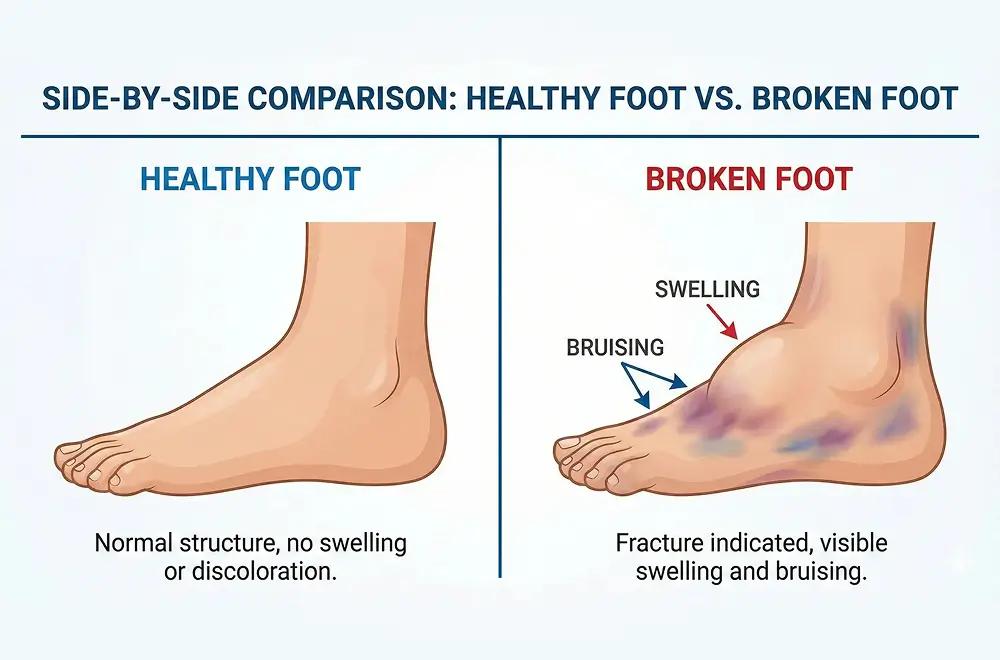
- The Look: Is the foot misshapen or crooked? That is a definite break.
- The Bruise: Does bruising appear instantly? Does it look dark purple or black? That likely signals a fracture.
The Risks: What Happens If You Keep Walking?
Displacement: A “stable” fracture means the broken ends are touching. If you walk on it, the bones can shift. Now they are separated.
Surgery Requirement: A stable fracture needs a boot. A displaced fracture needs screws and plates.
Non-Union: The bone fails to knit back together because it keeps moving. This leads to permanent damage.
Specific Scenarios: From “Walking Boot” to “Barefoot”
Can You Walk on a Broken Foot with a Boot?
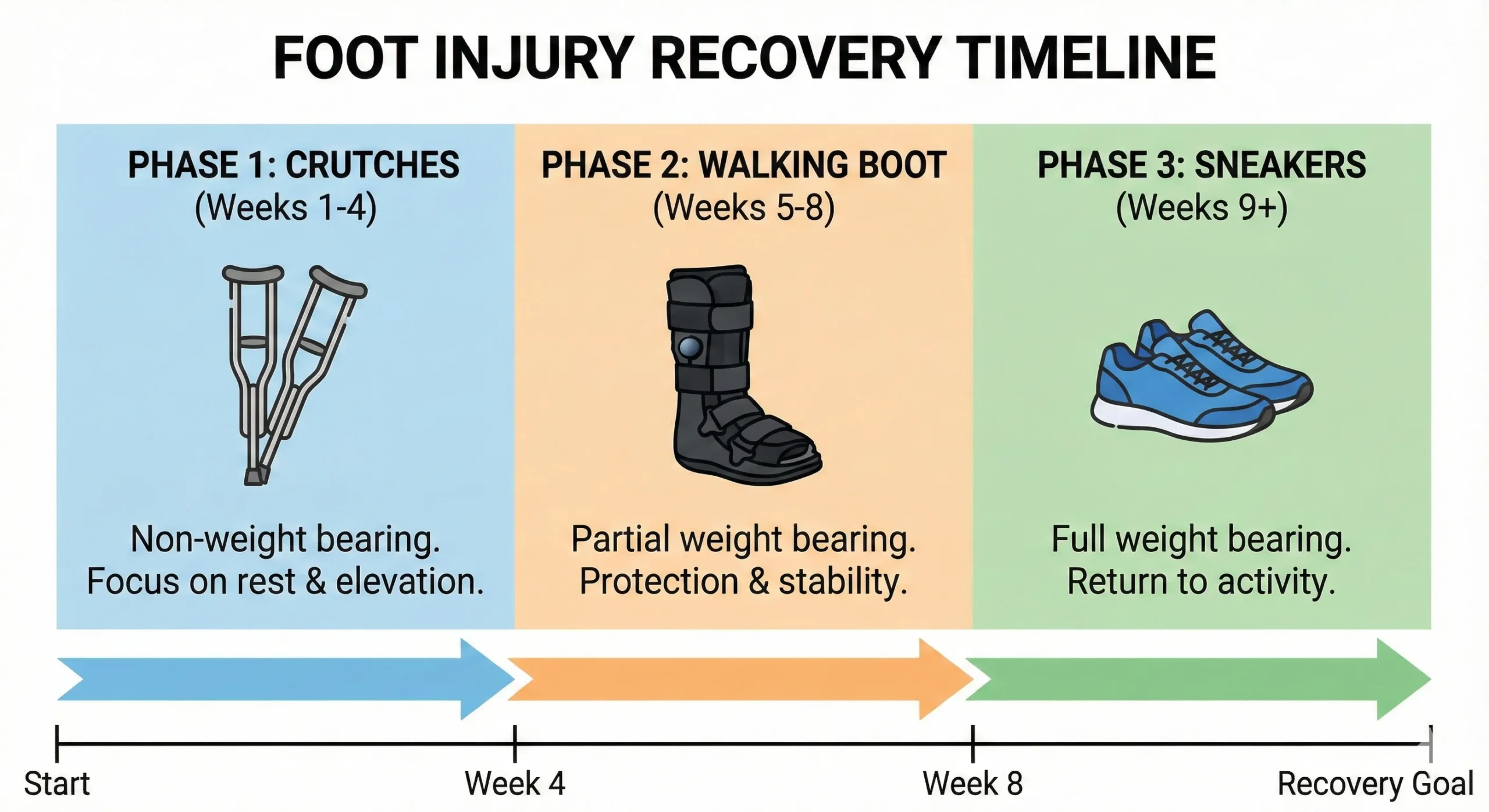
Yes, but only if the doctor says so. The boot protects the bone and limits movement. However, you usually need crutches for the first few weeks to keep weight off entirely. If it hurts inside the boot, stop immediately.
Can You Walk on a Hairline Fracture?
This is the “Silent” Break. You might walk on this for weeks without knowing. It feels like a deep ache. The danger is high. It can snap completely if you ignore the nagging pain.

Doctor Recommended Protection
Stabilize fractures and allow safe walking (when approved) with adjustable air compression.
United Ortho Short Air Cam Walker Fracture Boot
Check Price on AmazonImmediate Treatment (Before the Doctor)
Stop Moving: Sit down. Do not test it.
R.I.C.E Method:
- Rest: Stay off the foot.
- Ice: Apply ice packs to reduce swelling.
- Compression: Wrap it gently (not too tight).
- Elevation: Keep the foot above heart level.
Stabilize: Do not try to realign the foot. Leave that to the professionals.

Reduce Swelling Fast
Reusable hot/cold therapy with compression straps to manage pain immediately.
Vive Cold/Hot Gel Compression Brace
Check Price on AmazonRecovery Timeline: When Will You Walk Normally?
Recovery takes time. Do not rush it.
- Toe Fracture: 4-6 weeks (Walking allowed with stiff shoes).
- Metatarsal Fracture: 6-8 weeks (Boot required).
- Ankle/Heel Fracture: 8-12+ weeks (Strict no-walking policy).
Frequently Asked Questions (FAQ)
Can you have a broken foot and not know it?
Yes. High pain tolerance or nerve damage (common in diabetics) can hide a break.
Can you walk on a broken foot after 2 weeks?
Usually, yes, if you are in a cast or walking boot. Do not walk barefoot.
What does a hairline fracture feel like?
A dull, deep ache that turns into sharp pain when you put weight on it. It often feels like “shin splints” in the foot.
Is walking on a broken foot too soon dangerous?
Yes. It causes the bone to heal in the wrong position.
Final Verdict: Don’t “Walk It Off”
Pain is a signal. Listen to it. If you can’t walk without limping, go to Urgent Care. Get the X-ray. It is better to wear a boot for a month than to limp for a lifetime.

Stay Mobile Safely
Keep weight off your injury with lightweight, folding crutches.
Shop Crutches for Recovery
Tariqul
Tariqul is a dedicated health and wellness blogger with a background in health sciences. With years of experience in patient education and health communication, he focuses on providing accurate, easy-to-understand information to help readers make informed decisions about their well-being. Passionate about bridging the gap between clinical knowledge and everyday life, Tariqu ensures his content is both practical and medically sound.