Short answer: yes. For many people with osteoarthritis in one knee, a cane held in the opposite hand takes some of the load off the painful knee, eases pain while walking, and helps them keep active. It works best when it’s the right height and used as part of a wider plan that includes exercise.
Osteoarthritis (OA) is the “wear and tear” type of arthritis, and the knee is one of the most commonly affected joints. Many people put off using a cane because they don’t want to “give in” to it. But keeping active is one of the most important things you can do for knee OA, and if a cane helps you walk further with less pain, it’s working for you, not against you.
How a cane helps a sore knee
When you walk, your knee takes a big share of your body weight with every step. A cane in the opposite hand lets your arm take part of that load. It also widens your base of support, so you feel steadier when the knee is stiff or “gives way”.
MedlinePlus lists assistive devices like canes alongside exercise, weight management and medicines as ways to manage osteoarthritis.
Which hand? The opposite one
This is the part many people get wrong. If your right knee hurts, hold the cane in your left hand. Then:
- Move the cane forward at the same time as your painful leg.
- Press down through the cane as you put weight on the painful knee.
- Step through with your good leg.
It feels odd for a day or two, then becomes natural. More detail: which side to use a walking cane.
If both knees hurt
Hold the cane on the side opposite the worse knee. If both are equally painful, or a cane isn’t enough, talk to your doctor or physical therapist about whether two canes, walking poles or a walker would be better.
Getting the most from your cane
- Right height: handle at wrist crease, elbow slightly bent. See cane size guide.
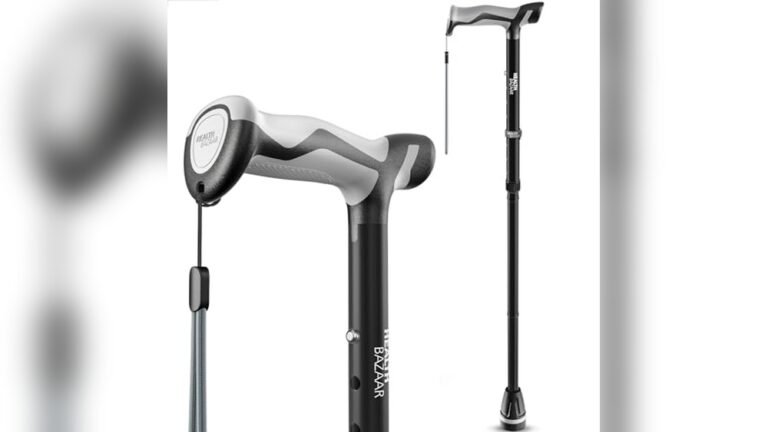
- Comfortable handle: if you also have arthritis in your hands, a fritz or ergonomic palm grip is much kinder: cane handle types.
- Lightweight: a carbon fiber or light aluminium cane is less tiring to lift. Compare materials in aluminium vs carbon fiber vs wood.
- Good shoes: cushioned, supportive soles reduce jarring. See shoes to wear with a cane.
Stairs with knee arthritis
Use the rule “up with the good, down with the bad”: step up with your good leg first, and go down with your painful leg (and the cane) first. Hold the handrail. Full guide: walking on stairs with a cane.
Keep moving
A cane shouldn’t replace exercise. It should make exercise possible. Gentle activity, strengthening the muscles around the knee (especially the thigh muscles), and staying at a healthy weight all make a real difference for knee OA. A physical therapist can give you exercises that suit your knee.
When to see your doctor
- Your knee is hot, red and very swollen.
- It locks, or gives way often.
- Pain is stopping you from sleeping or walking at all.
- You’ve had a fall.
Frequently asked questions
Will using a cane make my knee weaker?
Not if you keep active and do strengthening exercises. Many people find the cane lets them walk more, which helps their strength.
Should I use a cane all the time with knee arthritis?
Many people use one only on bad days, for longer walks, or outdoors. Use it whenever it reduces pain or makes you steadier.
Is a walking pole better than a cane for knee arthritis?
Some people like poles for longer walks on trails. For everyday support, especially indoors and on stairs, a cane is usually more practical.
Related: best walking canes for arthritis
Sources
- MedlinePlus: Osteoarthritis
- MedlinePlus: Using a cane
- MedlinePlus: Exercise for Older Adults