Choosing the right walking stick can make a big difference in your comfort and balance. But how do you know if a walking stick is the right height for you?
Using one that’s too tall or too short can cause pain or even lead to falls. You deserve a walking stick that fits you perfectly, helping you move with ease and confidence. Keep reading to find simple tips that will help you pick the perfect height for your walking stick—so every step feels just right.
Choosing The Correct Walking Stick Height
Picking the right height for a walking stick matters a lot. A stick that is too tall or too short can cause discomfort and reduce support. The right height helps keep your posture straight and your balance steady. It also lowers the risk of strain on your wrist and shoulder.
Finding the correct height is simple. It depends on your body size and walking style. Trying out different heights can help you feel what works best for you.
Measure Your Wrist Position
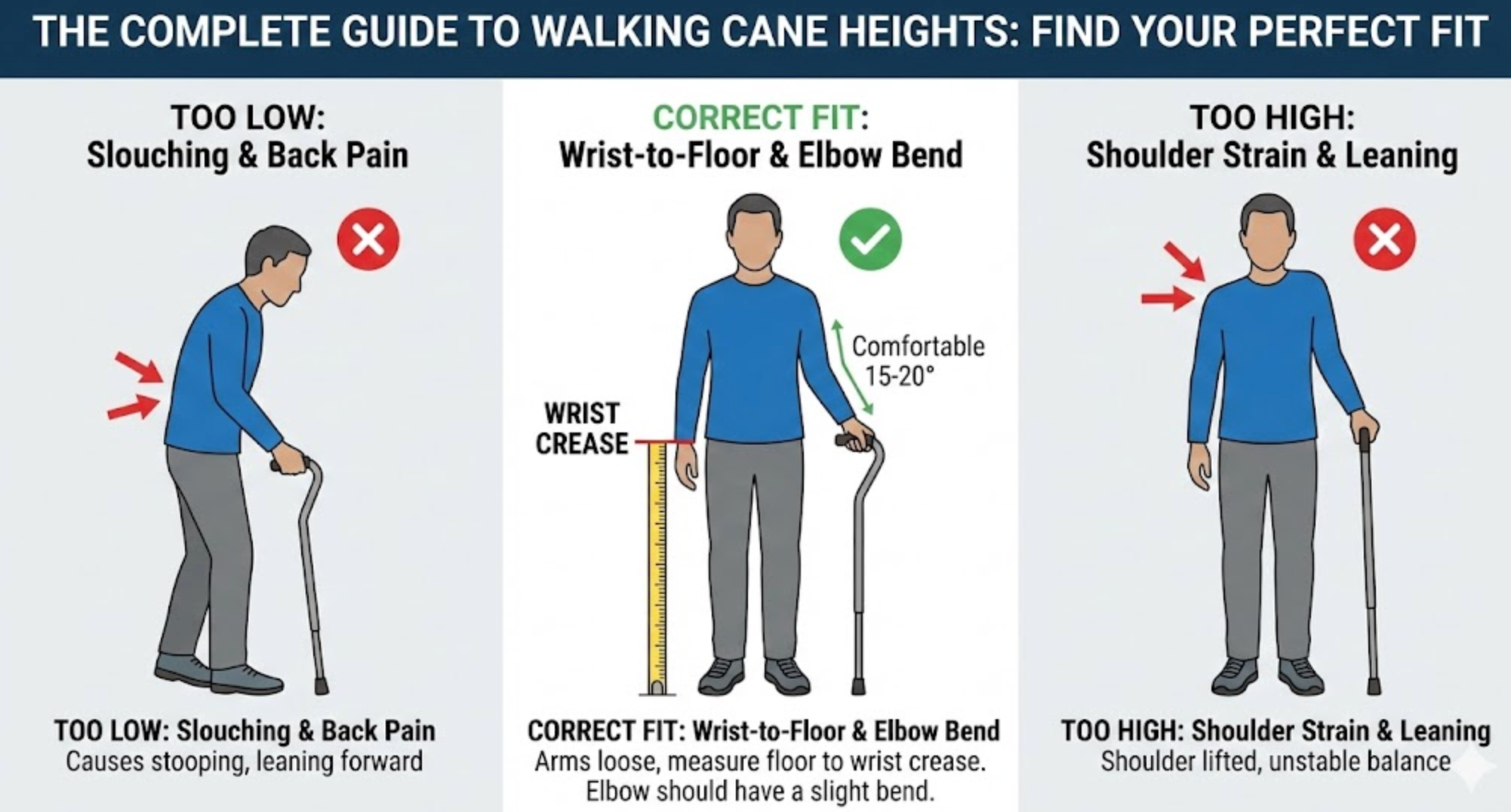
Stand straight with your arms relaxed at your sides. Your wrist should be the guide for the walking stick height. The top of the stick should reach just below your wrist. This height lets your arm bend slightly when you hold the stick.
Check Your Elbow Angle
Hold the walking stick and bend your elbow. Aim for an angle between 15 and 20 degrees. This angle gives enough comfort and control while walking. Too straight or too bent can cause discomfort.
Test Walking With The Stick
Walk around using the stick at the chosen height. Feel how your arm moves and how steady you feel. The stick should support your weight without making you lean forward or backward. Adjust the height if you feel strain or imbalance.

Credit: canemasters.com
Measuring Your Ideal Walking Stick Length
Choosing the right walking stick length is key for comfort and support. A stick too tall or short can cause strain. Measuring your ideal walking stick length helps avoid pain and improves balance. Two simple methods can help find the perfect height. Both are easy to do at home.
Using Arm Position
Hold your arm straight down by your side. Bend your elbow slightly, about 15 degrees. The top of the walking stick should reach just above your wrist. This position keeps your arm relaxed and natural. Your hand grips the stick without bending your wrist too much. This method fits most people well and feels comfortable.
Standing Measurement Method
Stand upright with your shoes on. Let your arms hang naturally at your sides. Measure from the floor to the crease of your wrist. This length matches the walking stick height you need. It helps keep your posture straight while walking. Use a tape measure or a ruler for best results.
Adjustable Vs Fixed Walking Sticks
Choosing the right walking stick height affects comfort and balance. Walking sticks come in two main types: adjustable and fixed length. Each type fits different needs and situations. Understanding their differences helps you pick the best one for you.
Pros Of Adjustable Sticks
Adjustable sticks change length quickly. This makes them useful for uneven paths or hiking. You can make them shorter or longer in seconds. They fit different users and body heights. Easy to carry and store due to collapsible parts. Great for people who try different activities. Helps keep posture correct on varied terrain.
When Fixed Length Works Best
Fixed sticks are simple and strong. They do not have moving parts that can break. Ideal for steady, flat surfaces like city sidewalks. Offer stable support for people with steady walking habits. Often lighter than adjustable sticks. Good choice if you use one stick every day. Easy to handle and very durable.
Credit: www.canesgalore.com
Signs Your Walking Stick Is Too Tall Or Short
Choosing the right height for a walking stick matters a lot. A stick that is too tall or too short can cause problems. It affects comfort and safety during walking. Knowing the signs helps you adjust or pick the correct size. Watch for clear signals from your body and movement.
Discomfort And Strain
A walking stick that is too tall makes your arm lift too high. This causes shoulder and wrist pain. Your hand may feel tired quickly. If the stick is too short, you bend down more. This puts pressure on your lower back. Both cases lead to muscle strain and discomfort. Pain during or after walking is a red flag.
Impact On Posture And Balance
A wrong height walking stick changes your posture. A tall stick pushes your body forward unnaturally. You may lean too much on one side. A short stick forces you to hunch over. Poor posture leads to poor balance. This increases the risk of falling. Proper height helps keep your body straight and steady.
Testing Walking Stick Comfort In Practice
Testing walking stick comfort in practice helps find the right height. This step is crucial. A stick that feels good while standing might feel different while walking. Try using the stick on various surfaces. Notice how your arm and hand feel. Check if you need to bend or stretch your wrist. Comfort during movement matters most for long walks.
Walking Techniques With A Stick
Hold the stick firmly but not too tight. Your elbow should bend slightly, around 15 to 20 degrees. Step forward with the opposite foot as the stick. This helps balance your body weight. Use the stick to support, not carry your weight. Keep your wrist straight to avoid strain. Walk naturally and adjust your pace if needed.
Adjusting Height On The Go
Some sticks have adjustable lengths. Use this feature to change height quickly. Shorten the stick on steep climbs for better control. Lengthen it on flat paths for comfort. Stop and test the stick after each change. Your arm should always feel relaxed. Adjusting height prevents pain and improves stability.
Choosing The Right Grip And Handle Height
Choosing the right grip and handle height on a walking stick helps with comfort and support. A good fit reduces hand strain and improves balance. It makes walking easier and safer.
The handle height should allow your arm to bend slightly when holding the stick. This position gives better control and less pressure on your wrist.
Different Types Of Grips
Walking sticks come with various grips like cork, foam, or rubber. Cork grips absorb sweat and feel soft. Foam grips offer cushioning and comfort. Rubber grips provide a firm hold, even in wet conditions.
Choose a grip that feels good in your hand. The grip should not be too hard or slippery. Comfort helps prevent blisters and hand fatigue.
Finding The Correct Handle Height
Stand straight and let your arms hang by your sides. The handle should line up with your wrist bone. This height keeps your arm relaxed and supports your body weight well.
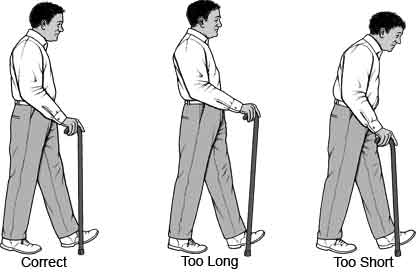
If the handle is too high, it can cause shoulder pain. Too low, and you will bend over, stressing your back. The right height keeps your posture natural.
Adjustable Handles For Flexibility
Some walking sticks have adjustable handles. This feature lets you change the height as needed. It suits different terrains or changing walking styles.
Adjustable handles help if others share the walking stick. They also allow for comfort on longer walks.
Credit: truemobility.co.uk
Frequently Asked Questions
How Do I Measure The Right Height For A Walking Stick?
Stand upright with your arms relaxed. Measure from the ground to your wrist crease. This ensures the stick supports your natural arm position.
What Happens If A Walking Stick Is Too Tall?
A stick that’s too tall causes poor posture and strain. It can lead to discomfort and reduced walking stability.
Can A Walking Stick Be Adjusted For Height?
Yes, many walking sticks are adjustable. You can customize the height for comfort and proper support.
Why Is The Right Walking Stick Height Important?
Proper height reduces fatigue and improves balance. It helps maintain correct posture and prevents joint strain.
Conclusion
Choosing the right height for a walking stick makes a big difference. A well-sized stick helps you walk safely and comfortably. Your elbow should bend slightly when holding the stick. Too tall or too short sticks can cause pain or imbalance.
Test the stick on flat ground before buying. Adjust it until it feels natural. This way, your walks become easier and more enjoyable. Always pay attention to your body’s signals. The right walking stick supports you every step of the way.

Tariqul
Tariqul is a dedicated health and wellness blogger with a background in health sciences. With years of experience in patient education and health communication, he focuses on providing accurate, easy-to-understand information to help readers make informed decisions about their well-being. Passionate about bridging the gap between clinical knowledge and everyday life, Tariqu ensures his content is both practical and medically sound.