
Quick answer: most people move from a walker to a cane within a few weeks of a knee replacement, and many stop using a cane around 4–8 weeks after surgery, depending on their strength, balance and their surgeon's advice. If you’ve recently had knee replacement surgery, you’re probably wondering how long you’ll need to rely on a cane while walking.…

Quick answer: after a hip replacement, most people move from a walker to a cane once their surgical team says it's safe. Choose a cane that adjusts to your height, has a comfortable grip and a non-slip tip, and hold it in the hand opposite your new hip. A quad cane can help if you need extra stability in the…

Quick answer: the best folding walking cane locks firmly when open, folds small enough for a bag, adjusts to your height, and has a comfortable grip and a good non-slip tip. Folding canes are ideal for travel and for people who only need a cane some of the time. What to look for FeatureWhy it matters Secure locking jointsLoose joints…
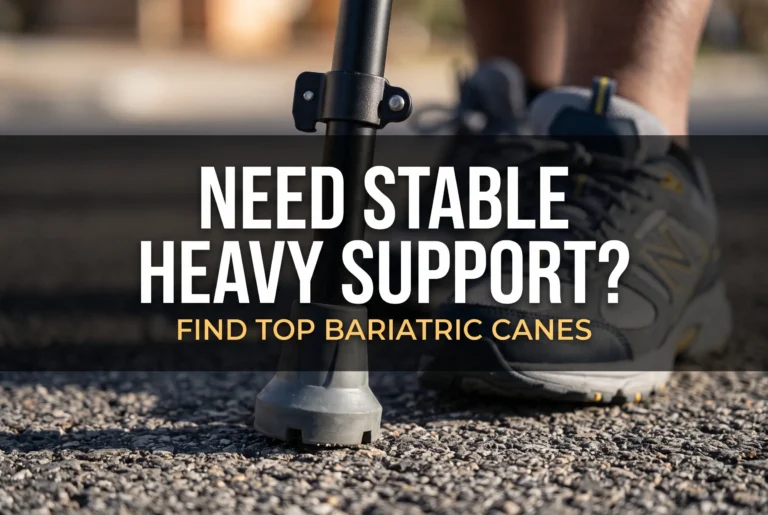
Quick answer: a bariatric (heavy-duty) walking cane is built with a stronger shaft and a higher weight rating than a standard cane. Many are rated for around 500 lbs, compared with roughly 250–300 lbs for many standard canes. Choose one with a weight rating comfortably above your body weight, a wide, comfortable handle, a large non-slip tip or a quad…

Quick answer: the best quad cane gives a stable four-point base, adjusts to the right height, and has a comfortable grip. Choose a small base for moderate support and easier handling, or a large base for maximum stability, for example after a stroke. Remember that all four feet must touch the ground before you lean on it. What to look…

Quick answer: a good cheap walking cane can still be safe. Look for an adjustable aluminium cane with a secure push-button lock, a comfortable grip and a replaceable rubber tip. Spend your money on fit and safety features rather than looks, and avoid canes with wobbly joints or no stated weight rating. What to look for FeatureWhy it matters Secure…

Quick answer: after knee surgery, choose a cane that adjusts to your exact height, has a comfortable grip, and gives the level of stability your surgeon or physical therapist recommends: a single-point cane for light support, or a quad cane if you need more. Hold it in the hand opposite the operated knee, and only switch from a walker or…

Quick answer: the best walking cane for most seniors is a lightweight, height-adjustable cane with an offset or ergonomic handle and a non-slip tip. If balance is a bigger concern, a quad cane or a self-standing cane gives a wider base. If you travel or only need a cane sometimes, choose a folding model. Choosing a cane for yourself or…

Quick answer: a cane can help some people with Parkinson's disease feel steadier, and a laser cane, which projects a line on the floor to step over, may help some people who experience "freezing" when walking. But Parkinson's affects walking in specific ways, such as shuffling, freezing and trouble turning, and the right aid varies a lot from person to…

Quick answer: the best folding mobility scooter for a cruise is light enough to lift or fold quickly, small enough to fit through cabin doors and be stored in your cabin, and approved by your cruise line. Check the cruise line's size and battery rules before you book. Traveling on a cruise should be relaxing. Narrow cabin doors and crowded…
