
Short answer: if you lean on your cane a lot, choose an offset or ergonomic palm grip, because they put your weight directly over the shaft. If your hands are stiff or sore, try a fritz or a soft palm grip. A classic crook handle looks traditional and hooks over your arm, but it's the least comfortable if you rely…
Short answer: measure the outside width of the bottom of your cane shaft, buy a rubber tip in that size, twist and pull the old tip off, then push the new one on until the shaft sits firmly against the metal disc inside. Replace the tip as soon as the tread looks smooth, cracked or worn to one side. A…
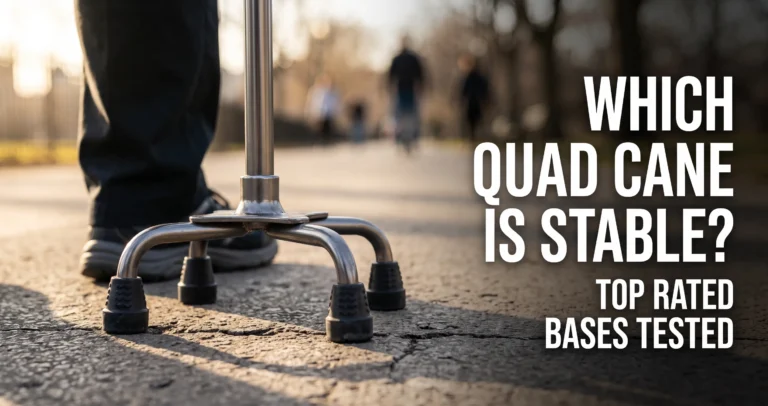
Short answer: a single-point cane is lighter and easier to carry, and it suits people who need a little help with balance. A quad cane has a four-legged base that stands on its own and spreads your weight over a wider area, so it suits people who need more support, such as after a stroke or with significant weakness on…

Quick answer: a 5'2" woman usually needs a cane of about 30.5–31.5 inches (77–80 cm). Many standard adjustable canes go this low, but check the minimum setting, and fine-tune it so the handle meets your wrist crease. Tripping over your own feet can be embarrassing. It hurts too. Maybe you’ve felt that frustration. It makes simple tasks feel impossible. Getting…

Quick answer: common signs your cane is too tall are shoulder or neck pain on the cane side, a sharply bent elbow, wrist pain, and the cane feeling awkward or pushed out to the side. Lower it so the handle meets your wrist crease. Ever tried to reach for something and felt that familiar twinge? Or maybe your shoulder aches…

Quick answer: after a left knee replacement, hold the cane in your right hand (the opposite side), and move it forward together with your left leg. Getting around after knee surgery can be tough. You might feel unsteady. Simple tasks can become a challenge. Trying to figure out which side to hold your cane can be frustrating. It feels like…

Quick answer: a cane slips on tile when the rubber tip is worn, dirty or wet, or too small and hard. Clean or replace the tip, choose a softer, wider tip with a deep tread, and dry wet floors before walking. That heart-stopping moment. You’re reaching for something. Your cane tip slides on the tile. You almost fall. It's a…
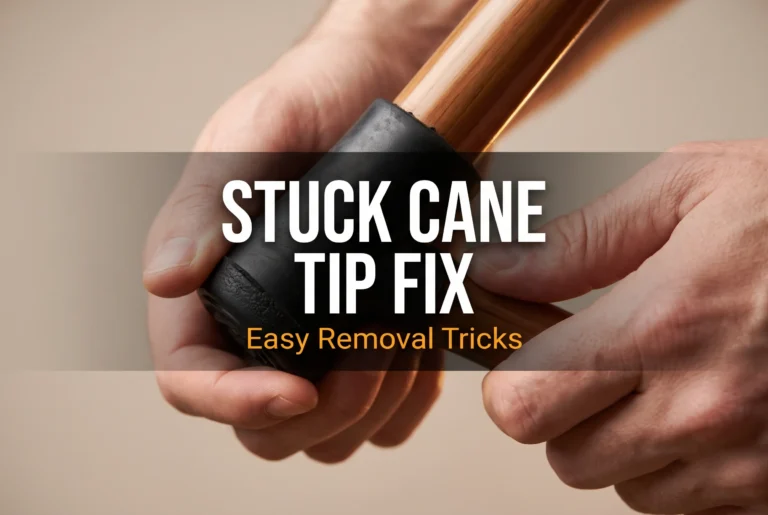
Quick answer: to remove a stuck cane tip, warm it in hot water or with a hairdryer to soften the rubber, then twist and pull firmly. If it still won't move and you're replacing it anyway, carefully cut it off, cutting away from your hand. Oh, that moment. You're heading out, feeling good, then *bam*. Your cane tip decides to…
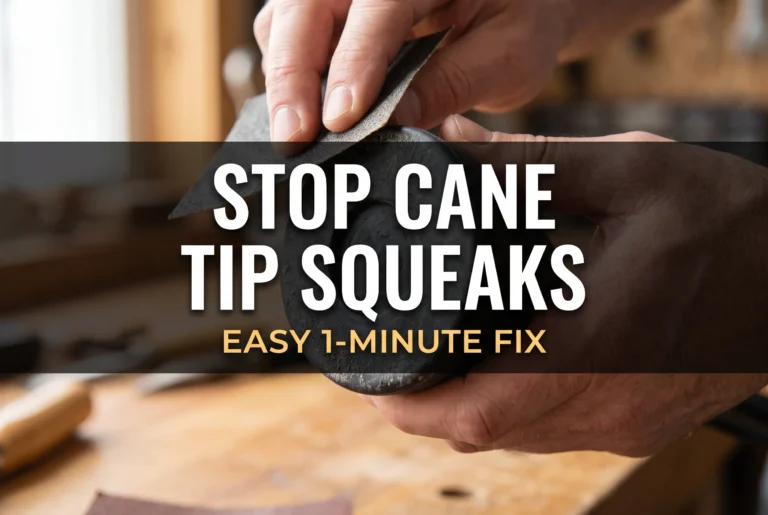
Quick answer: a squeaking cane usually comes from a worn or loose rubber tip, a loose height-adjustment button, or a folding joint. Check the tip first and replace it if it's worn, then clean and tighten the other parts. That awful squeak. You know the one. It starts with every step. It's a little embarrassing. It can even be a…

Quick answer: a folding cane usually wobbles because the joints aren't fully seated, the elastic cord inside has stretched, or the joint ends are worn. Push each section firmly together, check the cord, and replace the cane if the joints stay loose. A sturdy walking cane offers vital support for many. It helps you move with confidence. A good cane…
