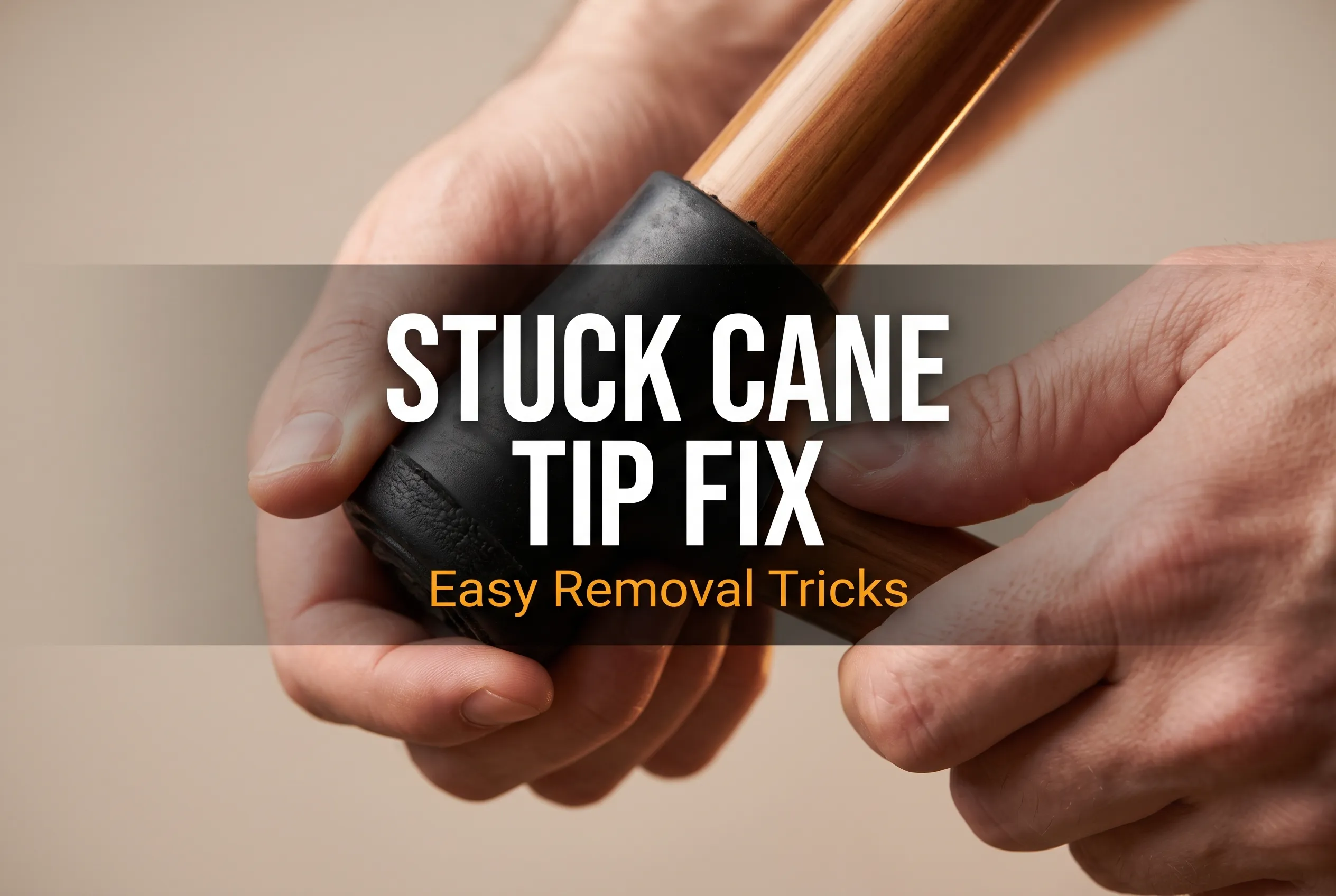
Short answer: measure the outside width of the bottom of your cane shaft, buy a rubber tip in that size, twist and pull the old tip off, then push the new one on until the shaft sits firmly against the metal disc inside. Replace the tip as soon as the tread looks smooth, cracked or worn to one side. A worn tip is one of the easiest fall risks to fix.
Why the tip matters more than people think
The rubber tip is the only part of your cane that touches the ground. When it is new, the tread grips the floor and the rubber absorbs a little shock. As it wears, it gets smooth and hard, and it can start to slide on tile, wet pavement or polished wood. That is exactly when you are leaning on the cane for support.
Tips are cheap, and replacing one takes a couple of minutes. If you use your cane every day, check the tip once a month.
When to replace your cane tip
Replace it if you notice any of these:
- The tread pattern on the bottom has worn smooth.
- One side is worn down more than the other, so the tip sits at an angle.
- There are cracks or splits in the rubber.
- You can see or feel the metal disc (the washer) inside the tip, or the end of the shaft is starting to push through.
- The tip slips on surfaces where it used to grip. If this is happening on tile, see why your cane slips on tile floors.
- It squeaks with every step. Sometimes that is the tip, sometimes it is the shaft. Our guide on stopping a squeaky cane tip helps you tell which.
Step 1: Measure the size you need
Cane tips are sold by the inside diameter of the tip, which should match the outside diameter of your cane shaft at the bottom. The most common sizes for standard canes are 3/4 inch (19 mm) and 7/8 inch (22 mm). Some heavier canes use 1 inch (25 mm).
The easiest way to measure:
- Take the old tip off (see Step 2), or measure just above it.
- Measure straight across the bottom of the shaft with a ruler or, better, a cheap caliper.
- If you are between two sizes, choose the one that matches more closely. A tip that is too big will twist and can come off. A tip that is too small will be very hard to fit and may split.
Quad canes use their own smaller feet on each leg, so measure one of the legs rather than the main shaft.
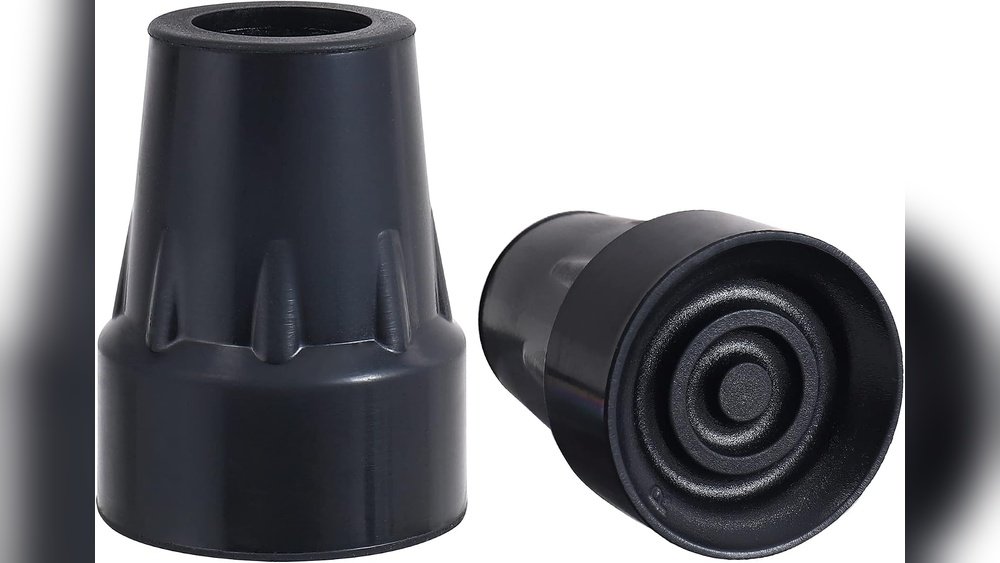
Step 2: Remove the old tip
Most tips come off with a firm twist-and-pull: grip the tip, twist it back and forth to break the seal, and pull it straight down.
If it will not move:
- Warm it up. Run the tip under hot tap water for a minute, or warm it briefly with a hairdryer. Warm rubber is softer and lets go more easily.
- Get a better grip. A rubber jar-opener pad or a dry cloth helps. Pliers can work, but grip gently so you do not dent the shaft.
- Work it loose. Push the edge of the rubber away from the shaft all the way around, then twist again.
- Last resort: cut it off, but only if you are replacing it anyway. Cut along the side of the rubber, away from your hand, and do not score the metal shaft.
We have a separate troubleshooting guide for a cane tip that won’t come off.
Step 3: Fit the new tip
- Clean the shaft. Wipe off grit and old rubber so the new tip seats properly.
- Check the inside of the new tip. Good tips have a metal washer inside. It stops the shaft from punching through the rubber. Make sure it is lying flat.
- Push the tip on. Hold the cane upside down and push the tip on with a twisting motion. If it is tight, warm the rubber first. A drop of rubbing alcohol on the inside can help it slide on, and it evaporates so the tip still grips. Do not use oil or soap, which can leave the tip loose.
- Make sure it is fully seated. Stand the cane upright and press down firmly. The shaft should sit hard against the washer, with no gap.
- Test it. Before you walk, lean on the cane on a non-slip surface, then try a few steps near something you can hold on to.
Choosing the right kind of tip
| Tip type | Good for | Keep in mind |
|---|---|---|
| Standard rubber tip | Everyday indoor and pavement use | Cheapest; check wear often |
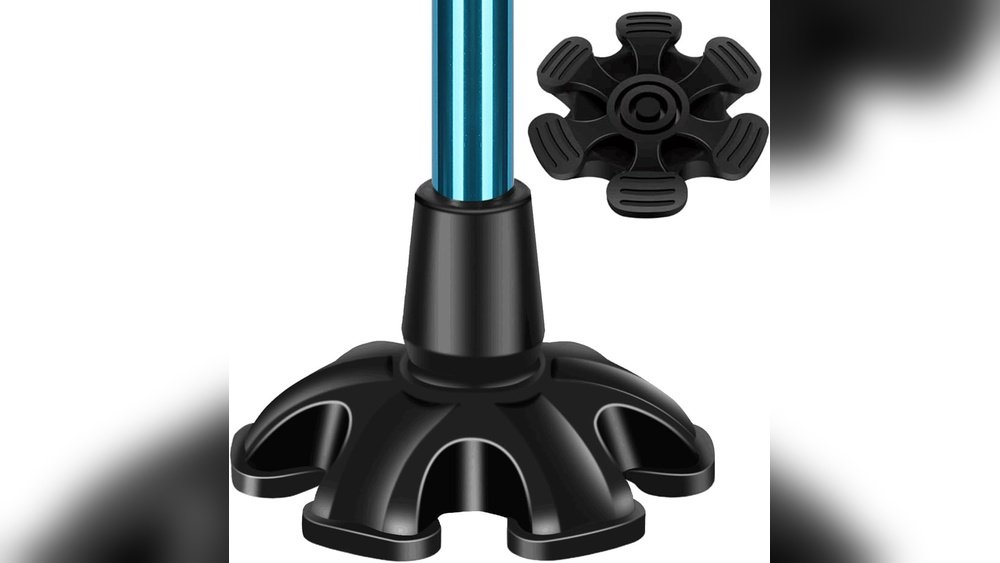
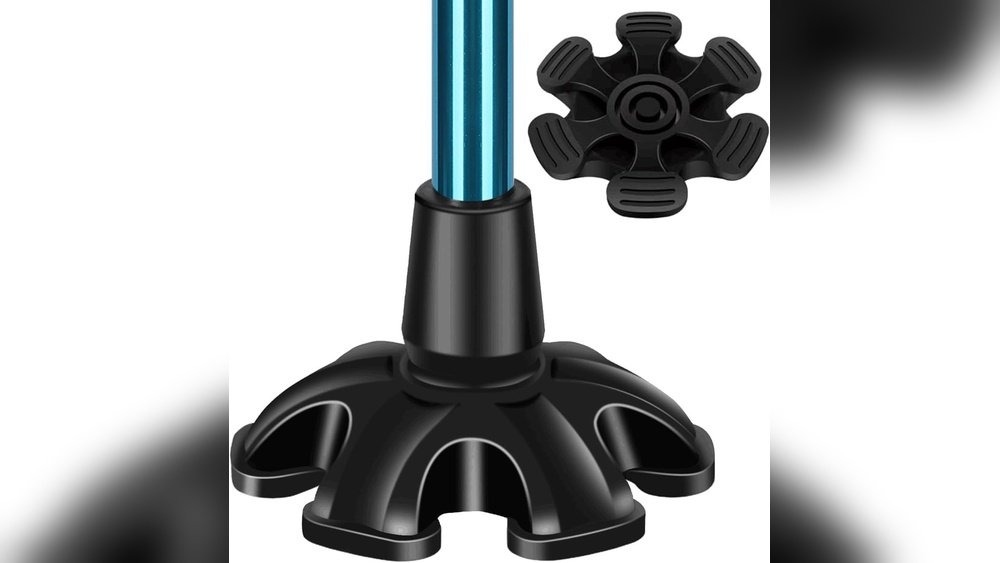
| Wide or “pivot” base tip | Extra stability and smoother steps; some stand up on their own | Larger and a little heavier |
| Heavy-duty tip | Heavier users, or canes that get a lot of use | Make sure it matches your shaft size |
| Ice tip / ice grip attachment | Winter, icy pavements | Usually flips up or comes off. Do not use the metal spikes on indoor tiles. |
Other things to check while the tip is off
- Height buttons: on adjustable canes, make sure the push button pops fully through the hole and the cane does not slide shorter when you lean on it.
- Folding joints: if your folding cane feels loose between sections, see how to fix a wobbly folding cane.
- Height: a new tip can change the height slightly. Check that the handle still lines up with your wrist crease. See our cane size guide.
Frequently asked questions
How often should I replace my cane tip?
There is no fixed schedule. It depends on how much you walk and on what surfaces. Daily users who walk outdoors often need a new tip every few months. Check it monthly and replace it when the tread is worn.
Are all cane tips the same size?
No. Measure your shaft first. The most common sizes are 3/4 inch and 7/8 inch, but they vary by cane and brand.
Can I use a crutch tip on a cane?
Only if the inside diameter matches your cane shaft exactly and the tip is rated for the job. Crutch tips are often larger.
Why does my new tip still slip?
Brand-new rubber can feel slick for the first few days, and wet or polished floors are slippery for any tip. If it keeps slipping, try a tip with a deeper tread or a wider base.
Sources
- MedlinePlus (U.S. National Library of Medicine): Using a cane
- MedlinePlus: Falls
Medical note: This article is for general information only and is not a substitute for professional medical advice. Talk to your doctor or physical therapist about your specific condition. Read our full medical disclaimer.

Written by
Health & mobility writer
Tariqul has a background in health sciences and experience in patient education and health communication. He writes practical, easy-to-follow guides on walking canes and mobility, based on trusted medical sources such as MedlinePlus.


