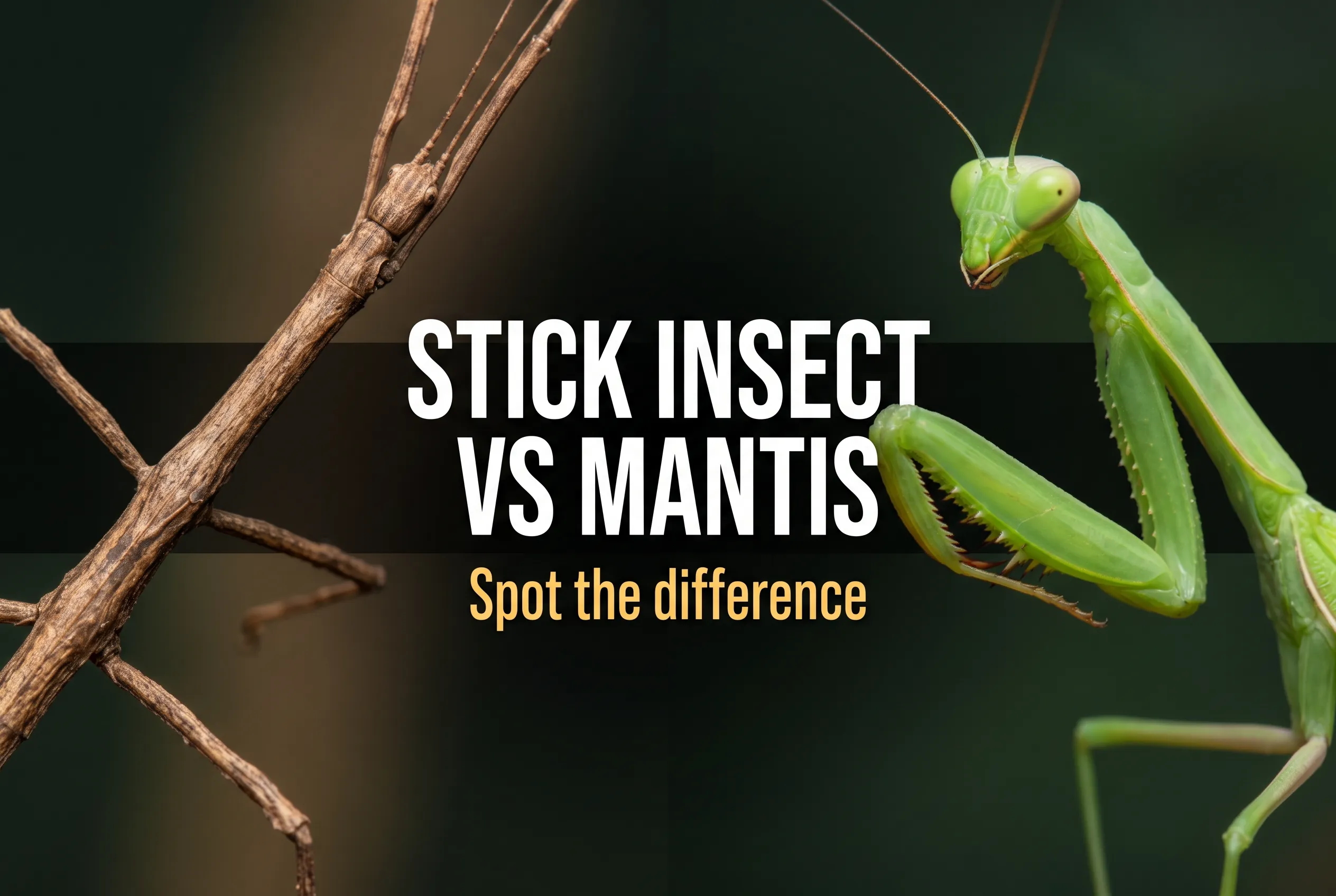
Have you ever come across a slender insect and wondered if it was a walking stick or a praying mantis? At first glance, they might seem quite similar, but these two insects have very different features and behaviors.
Understanding the difference can help you appreciate nature more and even avoid confusion if you spot one in your garden. Keep reading, and you’ll quickly learn how to tell these fascinating creatures apart with simple tips you can use anytime.
Physical Traits
Physical traits help tell a walking stick and a praying mantis apart easily. Both insects use their bodies to blend in with nature. Their shapes, colors, and leg designs serve different purposes. These traits affect how they move and hide from predators. Understanding these differences makes it easier to identify each insect.
Body Shape And Size
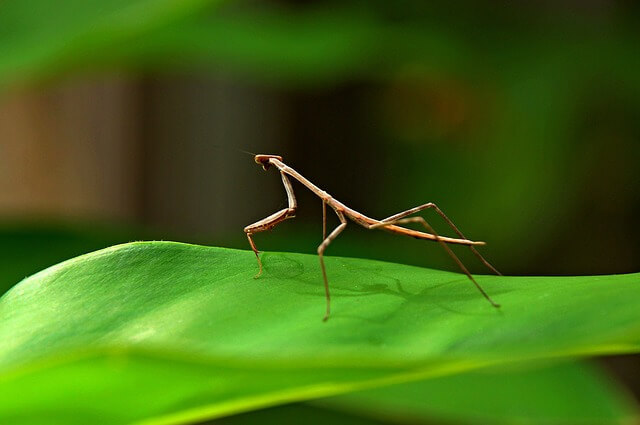
Walking sticks have long, thin bodies that look like twigs. Their shape is straight and narrow. Most walking sticks are larger than praying mantises. Praying mantises have wider bodies with a triangular head. They appear more compact and strong. Their body shape allows quick movement and hunting.
Color And Camouflage
Walking sticks usually have brown or green colors. This helps them blend with branches and leaves. Some even look like bark or dry twigs. Praying mantises often show bright greens or browns. Their colors help them hide in grass or flowers. Both insects use camouflage to avoid predators.
Leg Structure
Walking sticks have thin, straight legs. Their legs help them hold onto plants tightly. Praying mantises have thick, spiked front legs. These legs catch and hold prey firmly. Their middle and back legs are slimmer for walking. Leg design shows how each insect lives and hunts.

Credit: www.reddit.com
Behavior Patterns
Behavior patterns reveal how walking sticks and praying mantises live and survive. These insects show unique ways to move, eat, and protect themselves. Understanding these habits helps us see their true differences.
Each insect uses its body and environment in special ways. Their actions match their shapes and needs. Let’s explore their movement, feeding, and defense to understand their behavior better.
Movement And Mobility
Walking sticks move slowly and stay still to avoid danger. They walk like twigs, blending with branches. Their slow movement helps them hide from predators.
Praying mantises move faster and with more purpose. They can walk, climb, and fly short distances. Their quick moves help them catch prey and escape threats.
Feeding Habits
Walking sticks mainly eat leaves and plants. They are herbivores and feed quietly at night. Their slow eating matches their calm lifestyle.
Praying mantises are hunters. They eat insects and small animals. They wait patiently, then strike fast to catch food with their front legs.
Defensive Mechanisms
Walking sticks rely on camouflage. They look like sticks or leaves to avoid being seen. When disturbed, they drop to the ground and stay still.
Praying mantises use their strong front legs to fight. They also show their wings to scare enemies. Their quick reactions help them survive danger.
Habitat And Distribution
Walking sticks and praying mantises live in different places and climates. Their homes depend on their needs and how they survive. Understanding their habitat and distribution helps us see how they fit into nature.
Preferred Environments
Walking sticks like warm, leafy areas. They stay where plants and trees are many. These insects use their stick-like bodies to blend with branches and leaves. They avoid open spaces to hide from predators.
Praying mantises prefer sunny spots with lots of plants. They hunt other insects, so they need places where prey is common. Gardens, grasslands, and forests suit them best. They like areas with tall grass and shrubs.
Geographical Range
Walking sticks live mostly in tropical and subtropical regions. They are common in Asia, Africa, and the Americas. Some species can be found in mild climates but rarely in cold zones.
Praying mantises are found worldwide, especially in warm and temperate areas. They live in North and South America, Europe, Asia, and Africa. Some species adapt well to different environments, spreading far.

Credit: maypoleofwisdom.com
Reproductive Methods
Walking sticks and praying mantises have unique ways to reproduce. Their methods suit their different lifestyles and survival needs. Understanding these methods helps us see how nature shapes each insect.
Both insects use mating and egg-laying to continue their species. Yet, the details of these processes vary greatly between them.
Mating Rituals
Praying mantises have a famous mating ritual. The female sometimes eats the male after or during mating. This behavior gives her extra nutrition for egg development. Males approach carefully to avoid being eaten.
Walking sticks have less dramatic mating rituals. Males use scent to find females. They simply join and mate without aggressive behaviors. Their mating is quick and peaceful.
Egg Laying And Development
Walking sticks lay eggs in hard cases called oothecae. These cases protect eggs from predators and weather. Eggs take weeks or months to hatch depending on the climate.
Praying mantises also lay eggs in oothecae. Their egg cases are foam-like and stick to plants. Inside, eggs develop in a warm, safe environment. The nymphs hatch ready to hunt small insects.
Role In Ecosystem
Both walking sticks and praying mantises play important roles in nature. They help keep balance in their habitats. Each insect affects the ecosystem in different ways. Their presence supports other plants and animals around them. Understanding their roles shows how nature stays healthy.
Predatory Impact
Praying mantises are active hunters. They eat many harmful insects. This helps protect plants from damage. Their hunting controls pest populations naturally. Walking sticks do not hunt. They mostly eat leaves. Their impact on pests is very low. Walking sticks help plants by recycling leaves.
Interaction With Other Species
Walking sticks blend into plants to avoid predators. They serve as food for birds and small animals. Praying mantises also become prey for larger animals. Both insects create food links in the ecosystem. Their presence supports many species’ survival. Each insect has a unique role in nature’s web.
Credit: yougethere.com
Frequently Asked Questions
What Are The Main Differences Between Walking Sticks And Praying Mantises?
Walking sticks mimic twigs to avoid predators, while praying mantises have distinct forelegs for hunting. Walking sticks rely on camouflage, whereas mantises use active predation and quick movements to catch prey.
How Do Walking Sticks And Praying Mantises Differ In Appearance?
Walking sticks have long, slender bodies resembling sticks or twigs. Praying mantises have triangular heads, large eyes, and folded forelegs adapted for grasping prey, making them look more insect-like and predatory.
Do Walking Sticks And Praying Mantises Have Different Behaviors?
Yes, walking sticks are mostly slow-moving herbivores that rely on camouflage. Praying mantises are active hunters, using their powerful forelegs to catch insects quickly and precisely.
Where Can Walking Sticks And Praying Mantises Commonly Be Found?
Walking sticks usually inhabit forests and shrublands, blending with branches. Praying mantises are found in gardens, grasslands, and forests, where they hunt smaller insects for food.
Conclusion
Walking sticks and praying mantises look alike but differ a lot. Walking sticks are insects that use their long bodies to hide on branches. Praying mantises have front legs that fold like they are praying. Both use their shapes to protect themselves.
Each plays a unique role in nature. Knowing their differences helps us appreciate them more. Nature’s designs are smart and surprising. Small creatures with big secrets.

Tariqul
Tariqul is a dedicated health and wellness blogger with a background in health sciences. With years of experience in patient education and health communication, he focuses on providing accurate, easy-to-understand information to help readers make informed decisions about their well-being. Passionate about bridging the gap between clinical knowledge and everyday life, Tariqu ensures his content is both practical and medically sound.