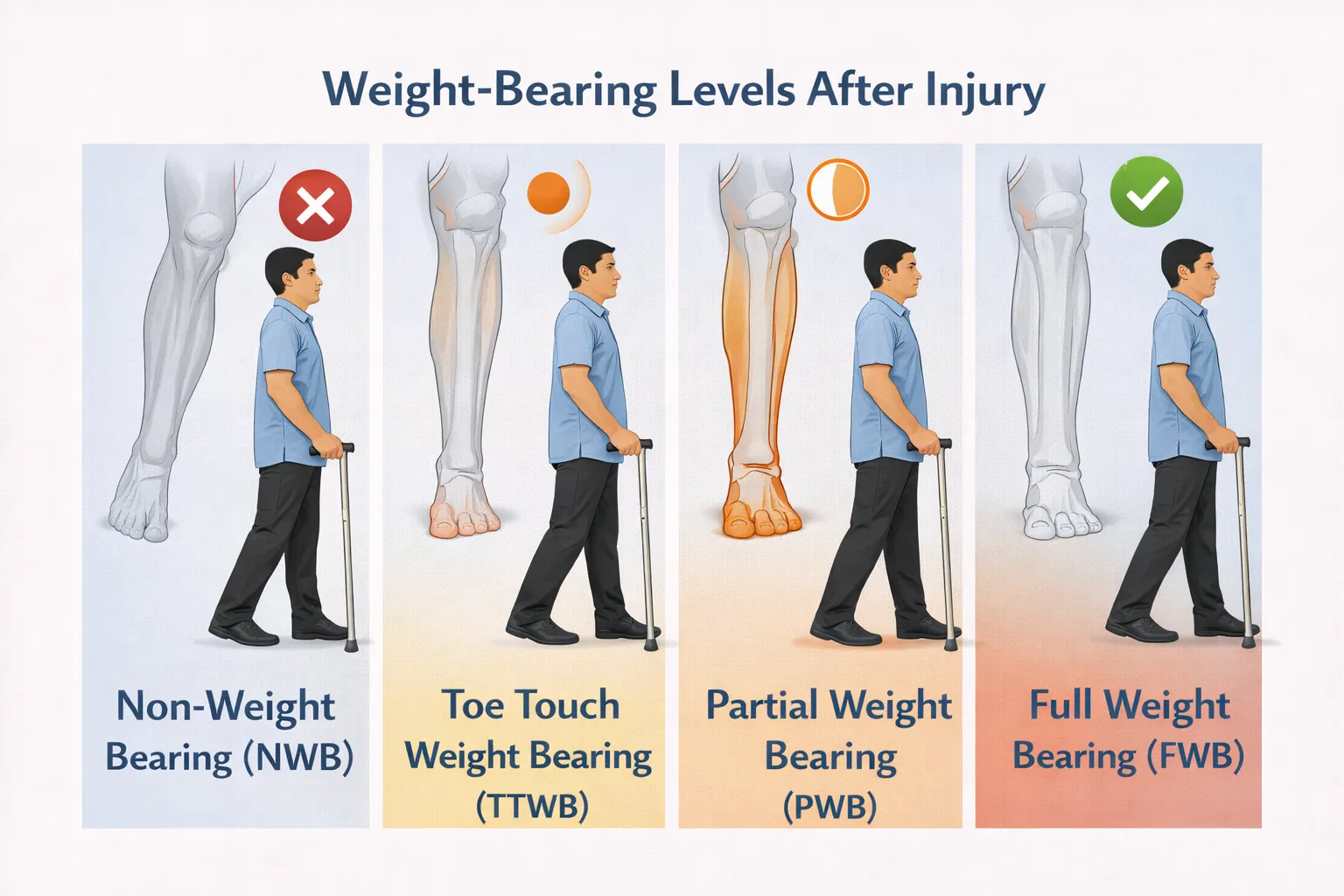
Short answer: hold the cane in the hand opposite your sore leg, move the cane and the sore leg forward together, press down through the cane as that leg takes weight, then take a normal-length step with your good leg. Check that the cane is the right height, keep your head up, and slow down a little. Rushing makes limping worse.
A cane should make your walk smoother, not just slower. If you’re still limping, a few small adjustments usually make a big difference.
1. Use the correct hand
This surprises a lot of people: the cane goes in the hand opposite your painful or weaker leg. That matches the way your arms naturally swing when you walk, and it lets the cane take weight off the sore side. Using the same-side hand often causes a lurching limp. More here: which side to use a cane.
2. Move the cane and the sore leg together
The rhythm is “cane and bad leg, then good leg”:
- Put the cane forward about one small step, at the same time as your sore leg.
- Push down on the cane as your sore leg takes your weight.
- Step through with your good leg, past the cane.
MedlinePlus describes this same pattern.
3. Get the height right
A cane that’s too short makes you lean and dip toward it. One that’s too tall pushes your shoulder up and makes you swing out to the side. Either can cause a limp. Use our cane height calculator, then fine-tune it.
4. Keep your steps even
Many people take a long step with the good leg and a short, quick one with the sore leg. Try to make both steps the same length, even if that means shorter steps overall. Counting “one, two” in your head helps.
5. Stand tall and look ahead
Looking down at your feet makes you stoop, and stooping shortens your stride. Look a few steps ahead, keep your shoulders relaxed, and stand tall.
6. Keep the cane close
Plant the cane about 4 to 6 inches from the side of your foot. Too far out and you’ll lean sideways with every step.
7. Slow down, and build strength
Walking a little slower gives you time to put your weight down evenly. Over time, strengthening the hip and thigh muscles of the weaker leg, with exercises from a physical therapist, is often what really ends a limp. See balance exercises for cane users.
Common mistakes that cause limping
| Mistake | Fix |
|---|---|
| Cane in the same-side hand | Switch to the opposite hand |
| Cane moving with the good leg | Move it with the sore leg |
| Cane too short | Raise it to wrist-crease height |
| Long step, short step | Make steps equal; slow down |
| Looking at your feet | Eyes forward, a few steps ahead |
| Worn, slippery tip | Replace the tip |
When a limp needs checking
If your limp is getting worse, appears suddenly, or comes with significant pain or swelling, see your doctor. A limp is a symptom, and it’s worth knowing the cause.
Frequently asked questions
Is it normal to limp when you first use a cane?
A little, yes, while you learn the rhythm. Most people walk more smoothly within a week or two of practice.
Will I still limp after I stop using the cane?
That depends on the cause. Strengthening exercises often help. See does using a cane make you weaker?
Does a quad cane help with limping?
It gives more stability, but it can slow your walk. If you need more support, compare quad vs single-point canes.
Sources
- MedlinePlus: Using a cane
- MedlinePlus: Exercise for Older Adults
Medical note: This article is for general information only and is not a substitute for professional medical advice. Talk to your doctor or physical therapist about your specific condition. Read our full medical disclaimer.

Written by
Health & mobility writer
Tariqul has a background in health sciences and experience in patient education and health communication. He writes practical, easy-to-follow guides on walking canes and mobility, based on trusted medical sources such as MedlinePlus.