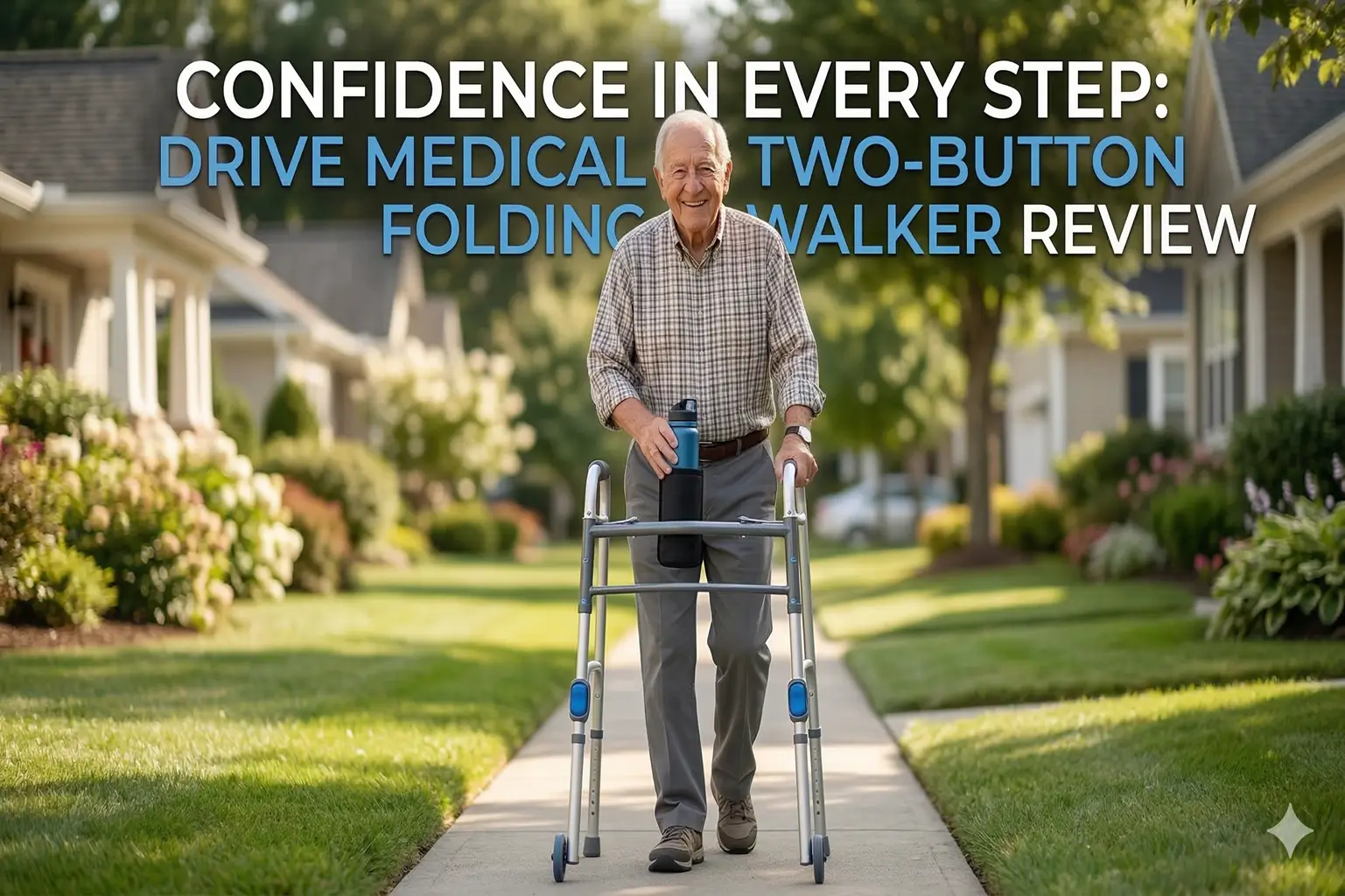
Short answer: a cane is for people who need a little help with balance or a sore leg. A standard walker gives the most support and suits people who can’t put full weight on a leg or who feel very unsteady. A rollator (a walker with wheels, brakes and usually a seat) suits people who need steady support but can still walk at a reasonable pace and want to go further.
Choosing a walking aid is a bit like choosing glasses: the wrong strength does more harm than good. Too little support and you’re at risk of falling. Too much and you can lose strength and walk more slowly than you need to.
The three options at a glance
| Cane | Standard walker | Rollator | |
|---|---|---|---|
| Support level | Light | Highest | Moderate to high |
| Hands used | One | Two | Two |
| Walking speed | Close to normal | Slow (you lift it with each step) | Fairly natural |
| Can take weight off a leg | A little | Yes, a lot | Some, but it can roll away |
| Seat to rest on | No (unless it’s a seat cane) | No | Usually yes |
| Stairs | Yes | No | No |
| Best place to use it | Anywhere | Indoors, short distances | Outdoors, shopping, longer walks |
When a cane is enough
A cane makes sense if you can walk on your own but feel a bit wobbly, or if one hip or knee is painful. You should be able to walk across a room without grabbing furniture. A cane also works well near the end of recovery, when you’re stepping down from a walker. MedlinePlus describes a cane as a good choice when you only need a little help with balance and stability.
If a single-point cane isn’t quite steady enough, a quad cane is the in-between step. Here’s how they compare: quad cane vs single-point cane.
When you need a standard walker
- You’ve been told not to put full weight on one leg after surgery or a fracture.
- You feel unsteady even with a cane, or you’ve had a fall while using one.
- You get tired quickly and need to lean on something with both hands.
Standard walkers have no wheels (or only two front wheels). That makes them very stable, but slow, because you lift or slide them forward with each step.
When a rollator is the better fit
- You need steady support but can walk at a fairly normal pace.
- You want to go further, to the shops or around the park, and need somewhere to sit and rest.
- You can manage the hand brakes reliably.
The catch: a rollator can roll away from you if you lean on it suddenly, so it’s not the right choice if you can’t put weight through a leg. Always lock the brakes before you sit down on one.
Signs it’s time to move up from a cane
- You’re leaning on the cane so hard that your arm or shoulder aches.
- You still reach for furniture and walls, even with the cane.
- You’ve had a fall or a near-fall while using it.
- You avoid going out because walking feels unsafe.
None of these means you’ve “failed”. Your body needs more support right now, and that may change again as you get stronger. Talk to your doctor or a physical therapist. They can watch you walk and suggest the right aid.
Can you use more than one?
Yes, and many people do. A common setup is a rollator for outings and a cane around the house, or a walker downstairs and a cane by the stairs. Just make sure each one is set to the right height for you.
Frequently asked questions
Is a rollator safer than a cane?
It gives more support, but “safer” depends on you. If you only need light support, a rollator can make you walk more slowly and lean forward. Match the aid to your needs.
Will using a walker make me weaker?
Not if it’s the right aid for you. Falling and then avoiding activity is far worse for your strength. As your balance improves, a therapist can help you step down to a cane.
Can I use a walker on stairs?
No. Use the handrail and a cane, or have someone help you. See how to use stairs with a cane.
Related: how do you know if you need a walking cane?
Sources
- MedlinePlus: Using a cane
- MedlinePlus: Mobility Aids
- MedlinePlus: Preventing falls
Medical note: This article is for general information only and is not a substitute for professional medical advice. Talk to your doctor or physical therapist about your specific condition. Read our full medical disclaimer.

Written by
Health & mobility writer
Tariqul has a background in health sciences and experience in patient education and health communication. He writes practical, easy-to-follow guides on walking canes and mobility, based on trusted medical sources such as MedlinePlus.