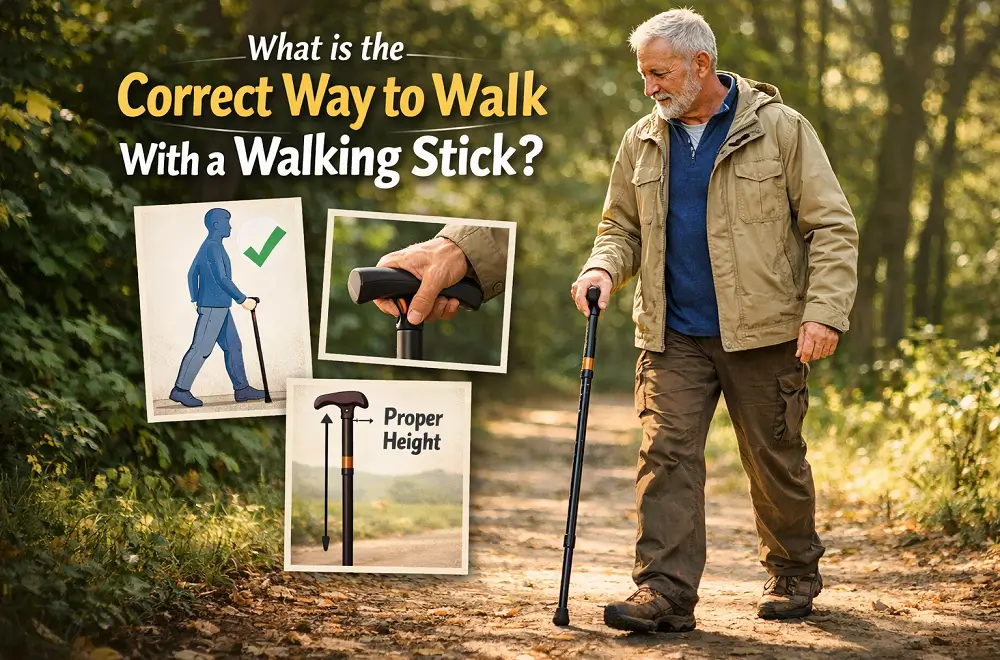
Are you using a walking stick but unsure if you’re doing it right? Walking with a stick can give you better balance and support—but only if you use it correctly.
The wrong way to walk with a stick might cause discomfort or even lead to falls. Imagine feeling more confident and steady every step you take. You’ll discover simple tips that make walking with a stick easier and safer. Keep reading to learn how to improve your walk and protect your body at the same time.

Credit: artwalkingsticks.com
Choosing The Right Walking Stick
Choosing the right walking stick makes walking safer and easier. It helps keep your balance and reduces strain on your legs. The right stick fits your body and walking style. This section explains how to pick the best walking stick for you.
Materials And Designs
Walking sticks come in many materials like wood, aluminum, and carbon fiber. Wood sticks look classic and feel sturdy. Aluminum sticks are light and strong. Carbon fiber sticks are very light and absorb shock well. Designs vary too, from simple straight sticks to foldable ones. Choose a material and design that suit your needs and comfort.
Proper Height Selection
The stick height matters a lot. It should match your body height to avoid pain. Hold the stick next to your leg. The top should reach your wrist when your arm hangs down. This height keeps your arm bent slightly when holding the stick. Too tall or too short sticks can cause discomfort and poor balance.While mastering the measurement technique is vital, be sure to check our comprehensive guide on how to know what size walking cane you need for a full understanding of selection factors.
Grip Comfort And Support
The grip is where your hand rests. Soft, cushioned grips reduce hand pressure. Hard grips may hurt your palm after long use. Some sticks have ergonomic grips shaped to fit your hand. Look for grips that feel natural and secure. Good grip support helps prevent hand fatigue and slipping.

Credit: www.youtube.com
Preparing To Walk
Preparing to walk with a walking stick takes simple steps. These steps help you stay balanced and safe. Setting up the stick right makes walking easier and more comfortable. Focus on three key areas before you start moving.
Adjusting The Stick Length
Set the stick height to match your body. Your elbow should bend slightly when holding the stick. Too long or too short can cause strain. Check the length by standing straight and holding the stick next to you.
Proper Hand Placement
Hold the walking stick firmly but not too tight. Your hand should rest just below the handle. The wrist stays relaxed to avoid tension. This grip helps you control the stick well during walking.
Proper height is just one part of the equation; for a complete overview of selection factors, see our in-depth article on choosing the best walking cane.
Posture Alignment
Stand tall with shoulders back and relaxed. Keep your head up and look forward. Avoid leaning on the stick too much. Good posture reduces fatigue and improves your balance.
Basic Walking Techniques
Using a walking stick can make walking easier and safer. Basic walking techniques help you move smoothly and avoid falls. Learning how to use your arms and legs together is key. Good balance and steady steps keep you comfortable and confident.
Coordinating Arm And Leg Movements
Hold the walking stick in the hand opposite to your weaker or injured leg. Move the stick forward as you step with your weaker leg. Your stronger leg moves next, creating a natural rhythm. This coordination helps support your body weight evenly. It also reduces strain and improves stability.
Step-by-step Walking Pattern
Start by placing the walking stick about one step ahead. Step forward with your weaker leg toward the stick. Then bring your stronger leg forward past the stick. Keep your steps steady and short. Avoid rushing to keep control and prevent slipping.
Maintaining Balance And Stability
Keep your back straight and look ahead, not down. Hold the walking stick firmly but not too tight. Place the stick flat on the ground for steady support. Take slow, careful steps to maintain your balance. Stop and rest if you feel tired or unsteady.

Credit: www.wikihow.com
Navigating different terrains with a walking stick needs care and attention. Each surface demands a slight change in how you move. Using the stick properly keeps you steady and safe. Practice makes walking easier and more comfortable.
Walking On Flat Surfaces
Place the walking stick a short step ahead of you. Step forward with the opposite foot. Keep your back straight and look ahead. The stick helps keep your balance and supports your weight. Walk at a steady and comfortable pace. Avoid dragging the stick to prevent slipping.
Handling Uneven Ground
Look carefully at the ground before stepping. Place the stick firmly on solid spots. Use the stick to test unstable areas. Step slowly and keep your body balanced. Shorten your steps to stay steady. Keep your weight slightly forward for more control.
Using Stairs And Inclines
On stairs, always hold the handrail if possible. Put the walking stick on the lower step first. Step up or down with your stronger leg. Move the weaker leg next, using the stick for support. On inclines, lean slightly forward. Use the stick to push and keep balance.
Common Mistakes To Avoid
Walking with a stick helps balance and reduces strain on your legs. Using it correctly matters a lot. Many people make simple mistakes that cause discomfort or injury. Avoid these to get the most benefit from your walking stick.
Incorrect Stick Length
Choosing the wrong stick length causes poor support. A stick too long or too short forces you to bend or stretch. This leads to back or shoulder pain. The stick should reach your wrist when your arm hangs at your side. This length keeps your arm slightly bent for best control.
Poor Posture
Slouching or leaning forward reduces the stick’s help. Good posture keeps your back straight and shoulders relaxed. Look ahead, not down at your feet. This reduces neck and back strain. Stand tall and use the stick to support your natural stance.
Improper Weight Distribution
Putting too much weight on the stick or the legs causes issues. The stick should share your body weight evenly. Push gently on the stick, not hard. This eases pressure on your joints and improves balance. Let the stick guide your steps, not carry your full weight.
Care And Maintenance Tips
Taking care of your walking stick is important for safety and durability. Proper care helps your stick last longer and work well every time you walk. Small habits make a big difference in keeping your stick strong and reliable.
Cleaning The Walking Stick
Wipe your walking stick after every use. Use a damp cloth to remove dirt and dust. Avoid soaking the stick in water. Dry it well to stop rust or damage. Clean the tip carefully to keep it grippy on different surfaces.
Checking For Wear And Tear
Inspect your walking stick regularly. Look for cracks, splits, or bends in the shaft. Check the handle for looseness or damage. Examine the tip for signs of wear or flattening. Early checks prevent accidents during use.
When To Replace Your Stick
Replace your walking stick if it shows deep cracks or breaks. Change it if the tip wears out and no longer grips well. Swap the stick if the handle feels loose or unstable. A worn stick can cause falls or injuries.
Frequently Asked Questions
How Do I Hold A Walking Stick Correctly?
Hold the walking stick with your dominant hand. Keep the stick close to your body. The handle should rest comfortably in your palm, and your wrist slightly flexed for support.
Which Side Should I Walk With A Walking Stick?
Use the walking stick on the opposite side of your injured or weaker leg. This helps distribute weight evenly and improves stability while walking.
How Long Should My Walking Stick Be?
The walking stick should reach the crease of your wrist when your arm hangs naturally. This length ensures proper support and comfort during walking.
Can Walking Stick Improve Balance?
Yes, a walking stick provides extra stability and balance. It helps reduce the risk of falls, especially on uneven or slippery surfaces.
Walking with a stick helps you stay steady and safe. Hold the stick on the side opposite your weak leg. Move the stick forward at the same time as your weak leg. Take small steps and keep your balance. Practice often to feel more confident.
Use your walking stick to support your body, not to lean heavily. Walking well with a stick makes daily life easier. Keep these simple tips in mind every time you walk. Your body will thank you for it.

Tariqul
Tariqul is a dedicated health and wellness blogger with a background in health sciences. With years of experience in patient education and health communication, he focuses on providing accurate, easy-to-understand information to help readers make informed decisions about their well-being. Passionate about bridging the gap between clinical knowledge and everyday life, Tariqu ensures his content is both practical and medically sound.