Quick answer: to choose the best walking cane, check seven things: the height (the handle should reach your wrist crease), the base (single tip for light support, quad base for more), the handle (offset or ergonomic if you lean on it), the weight of the cane, its weight capacity, the tip, and whether it’s adjustable or folding. Get the height right first. Everything else comes second.
Buying a cane looks simple until you’re standing in front of a shelf of them. They all seem similar, but small differences decide whether a cane helps you walk confidently or ends up in the cupboard. Here’s a straightforward checklist.

The 7-point checklist
1. Height: the most important thing
Stand tall in your everyday shoes with your arms relaxed. The top of the handle should line up with the crease on the inside of your wrist, and your elbow should bend slightly when you hold it. That matches the guidance from MedlinePlus. A cane that’s too tall strains your shoulder. One that’s too short makes you stoop. Try our cane height calculator.
2. Base: single tip or four feet?
A single-point cane is light, works on stairs and outdoors, and suits people who need a little help with balance. A quad cane has four small feet, stands on its own and gives more stability, but it’s heavier and awkward on stairs. Not sure? Read quad cane vs single-point cane. For a full rundown of every style, see types of walking canes.
3. Handle: where comfort comes from
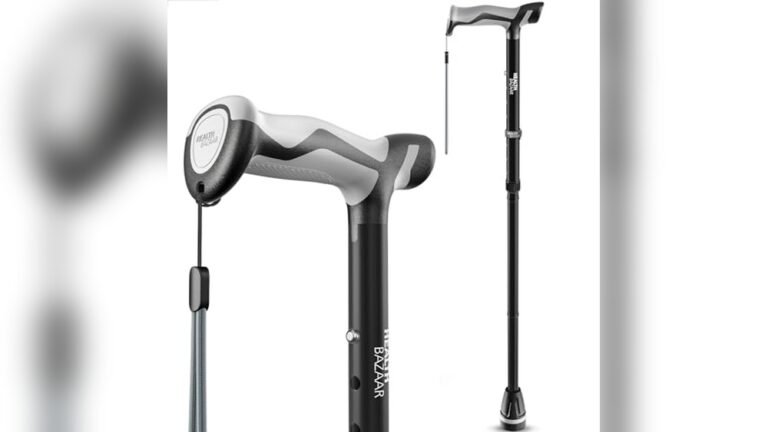
If you lean on your cane, choose an offset handle, which puts your weight straight down the shaft. If your hands are sore or arthritic, an ergonomic palm grip or a fritz handle spreads pressure. Classic crook handles look nice but are the least comfortable for heavy use. More in walking cane handle types.
4. Weight of the cane
You lift your cane with every step. Aluminium is light and affordable, carbon fiber is lighter still, and wood is heavier but solid and classic. Compare them in aluminium vs carbon fiber vs wooden canes.
5. Weight capacity
Every cane has a maximum user weight, usually printed on the label or in the listing. If you’re a heavier user or lean hard on your cane, choose a heavy-duty or bariatric cane with a higher rating.
6. The tip
A good rubber tip with a deep tread grips the floor. Some canes come with a wide or pivoting tip that improves stability and lets the cane stand by itself. Tips wear out, so check yours monthly. See how to replace a cane tip.
7. Adjustable, folding or fixed?
Adjustable canes let you fine-tune the height and adapt to different shoes, which makes them the best choice for most first-time buyers. Folding canes are great for travel or occasional use. Fixed-length wooden canes need to be cut to your exact height.
Quick decision guide
| Your situation | Good starting choice |
|---|---|
| Slightly unsteady, sore knee or hip | Adjustable single-point cane with offset handle |
| Weakness on one side, or a single tip feels wobbly | Quad cane or self-standing cane |
| Arthritis in the hands | Ergonomic or fritz grip, lightweight shaft |
| Travel or occasional use | Folding adjustable cane |
| Heavier user | Heavy-duty or bariatric cane |
| Over 6 feet tall | Check the maximum height: canes for tall men |
Our recommended canes
Advanced Canes: Stability & Specialty Picks

HONEYBULL Air Cushion Tip Cane
Air cushion tip provides superior stability and shock absorption.

Heavy Duty Free Standing All-Terrain Cane
Robust design with a self-standing pivot base for ultimate stability.

HurryCane Freedom Edition (T Handle)
Easily foldable, reliable cane popular for travelers and daily use.

Asterom Handmade Ergonomic Wooden Cane
Unique, handcrafted wooden design with a comfortable ergonomic grip.
Our Top 4 Recommended Adjustable Canes

REHAND Basic Foldable Cane
Standard reliable adjustable and collapsible design for portability.

Lightweight All-Terrain Cane (Shock Absorption)
Shock absorption technology for stability on uneven ground.

REHAND Heavy Duty All-Terrain
Robust construction with a wide all-terrain tip for maximum support.

REHAND Self-Standing Pivot Cane
Pivot base allows the cane to stand freely and adapt to various surfaces.
Where to buy
Pharmacies and medical supply stores let you try canes in person, which is useful for your first one. Online stores have a far bigger choice. Our guide on where to buy a walking cane compares the options.
Frequently asked questions
What is the best walking cane for balance?
For mild balance problems, a lightweight offset cane. If that still feels wobbly, a quad or self-standing cane gives a wider base. See walking canes for balance problems.
How do I know if I need a cane at all?
Common signs include holding on to furniture or walls, feeling unsteady outdoors, or pain in one leg when you walk. See how do you know if you need a walking cane?
Which hand should I hold my cane in?
Usually the hand opposite your weaker or painful leg. Here’s why: which side to use a walking cane.
Should I ask a professional?
If you’re recovering from surgery, have had a fall, or aren’t sure how much support you need, a doctor or physical therapist can recommend the right type and set it up for you.
Sources
- MedlinePlus (U.S. National Library of Medicine): Using a cane
- MedlinePlus: Mobility Aids