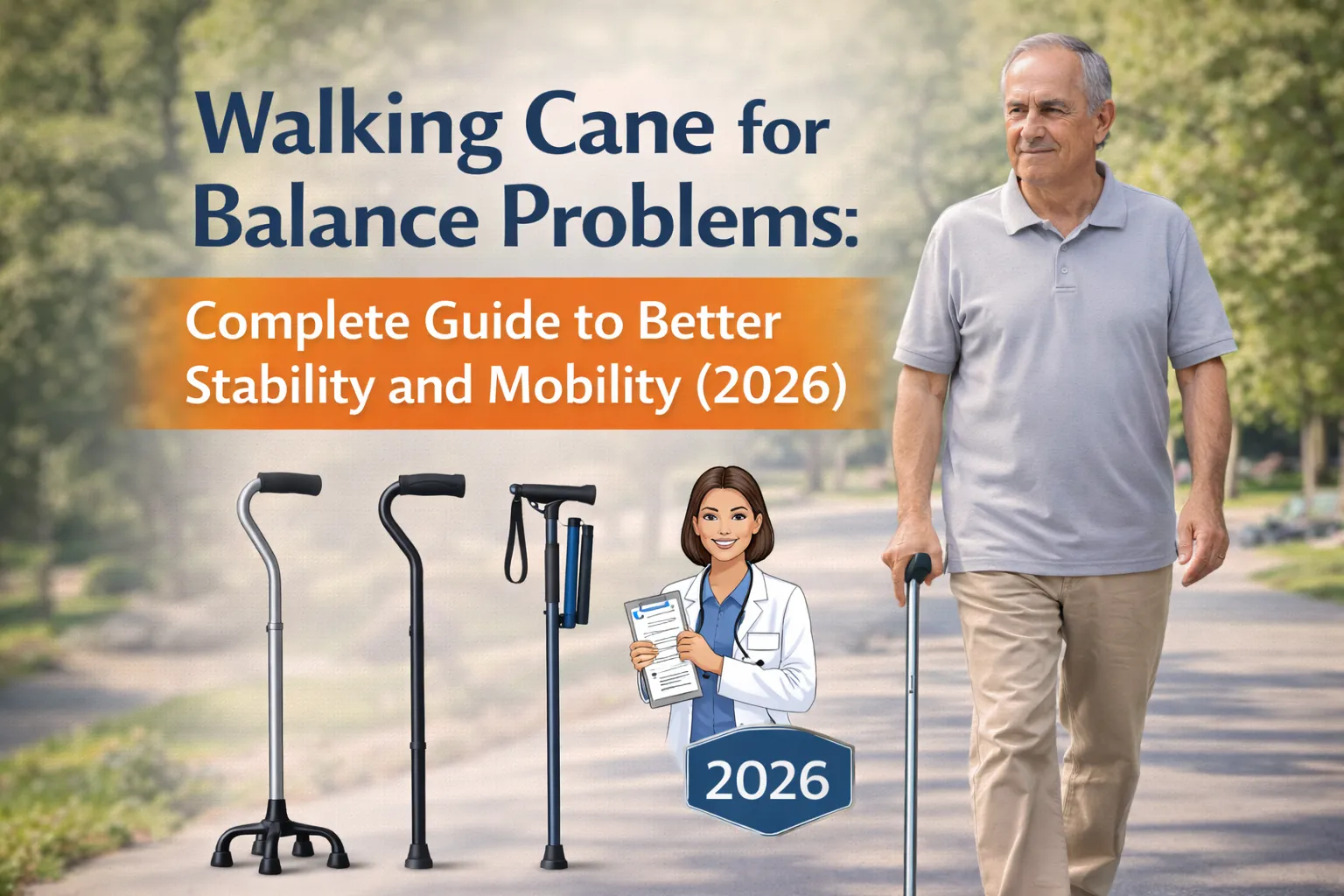
Short answer: with neuropathy in your feet, a cane does two jobs. It gives you an extra point of support, and it sends “feedback” from the ground up through your hand, which helps make up for the feeling your feet have lost. Look for a sturdy, correctly sized cane with a comfortable grip and a wide or non-slip tip. A quad cane is worth considering if you feel very unsteady.
Peripheral neuropathy, often linked to diabetes, can leave your feet numb, tingly or burning. One of the less obvious effects is on balance. Your brain relies on signals from your feet to know where the ground is and how you’re standing. When those signals are weaker, you can feel unsteady, especially in the dark or on uneven ground.
How a cane helps with neuropathy
- Extra feedback: your hand still has good feeling. Through the cane, it tells your brain about the ground: slopes, edges, soft patches. Many people with neuropathy say they feel “more connected” to the floor with a cane.
- A wider base: two feet plus a cane is steadier than two feet alone.
- Confidence to keep walking: staying active matters for strength, circulation and blood sugar control.
MedlinePlus explains how nerve problems and other conditions can affect balance, and why falls are a concern.
What to look for in a cane
| Feature | Why it matters with neuropathy |
|---|---|
| Correct height | A cane that’s too short makes you look down and lean forward. See our cane height calculator. |
| Rigid, sturdy shaft | Gives clear feedback. A wobbly folding joint blurs the signal. |
| Comfortable grip | If your hands are also affected, a wide ergonomic or fritz handle reduces pressure. See handle types. |
| Grippy or wide tip | Prevents slips you might not notice starting. See cane tips. |
| Quad base (if needed) | More stable if a single tip feels wobbly. Compare quad vs single-point canes. |
Single-point or quad cane?
If you mainly feel a little unsteady outdoors or in the dark, a single-point cane is usually enough, and it gives the clearest feedback. If you feel unsteady even indoors, or you’ve had falls, a quad cane or a walker may be safer. A physical therapist can watch you walk and help you choose.
Safety tips when your feet are numb
- Light your way. With less feeling in your feet, your eyes do more of the balance work. Use night lights and a cane light outside. See night walking safety.
- Look ahead, not down. Scan the path a few steps ahead.
- Wear supportive, closed shoes with firm soles. Thin soles reduce stability, and loose slippers are a trip hazard. See shoes to wear with a cane.
- Check your feet daily for cuts, blisters or redness you might not feel, especially if you have diabetes.
- Take uneven ground slowly. Use the cane to “test” grass, gravel or kerbs before stepping. See walking on uneven ground.
- Make home safer: remove loose rugs and clutter. Our home safety checklist covers the rest.
Balance training helps too
A cane supports you, but it doesn’t train your balance. Gentle balance and strength exercises, ideally guided by a physical therapist, can help you feel steadier over time. See simple balance exercises for cane users.
When to talk to your doctor
- Your numbness or weakness is getting worse.
- You’ve fallen, or nearly fallen.
- You have a foot wound that isn’t healing.
- You feel dizzy as well as unsteady.
Frequently asked questions
Does a cane really help with neuropathy?
For many people, yes. Beyond physical support, feeling the ground through the cane gives your brain extra information when your feet can’t.
Which hand should I use?
If one leg is weaker or more affected, hold the cane in the opposite hand. If both are similar, use whichever hand feels steadier. That’s often your dominant hand.
Are walking poles better for neuropathy?
Some people like two poles on trails, because they give feedback on both sides. For everyday use around town and at home, a cane is usually more practical.
Sources
- MedlinePlus: Balance Problems
- MedlinePlus: Using a cane
- MedlinePlus: Preventing falls
Medical note: This article is for general information only and is not a substitute for professional medical advice. Talk to your doctor or physical therapist about your specific condition. Read our full medical disclaimer.

Written by
Health & mobility writer
Tariqul has a background in health sciences and experience in patient education and health communication. He writes practical, easy-to-follow guides on walking canes and mobility, based on trusted medical sources such as MedlinePlus.


